Newcastle, King County
A chimney in Newcastle is shaped by where the house stands more than by when it was built. The city is small, hilly and green, and most of its homes are younger than the county average. What wears on a flue or a crown here is the slope it sits on, the weather that reaches its open side and the trees that lean over the roof. This page gathers what public records say about those conditions, with the source beside each claim, so that a quote from us can be read against facts you can check.
Book an inspection
Book your $99 inspection
$99 plus tax, deducted when you approve the repair
Not sure where to start
Pick what you're seeing at your Newcastle home — we'll point you to the right fix.
What we do
The same crew, the same written quote — for Newcastle homes.
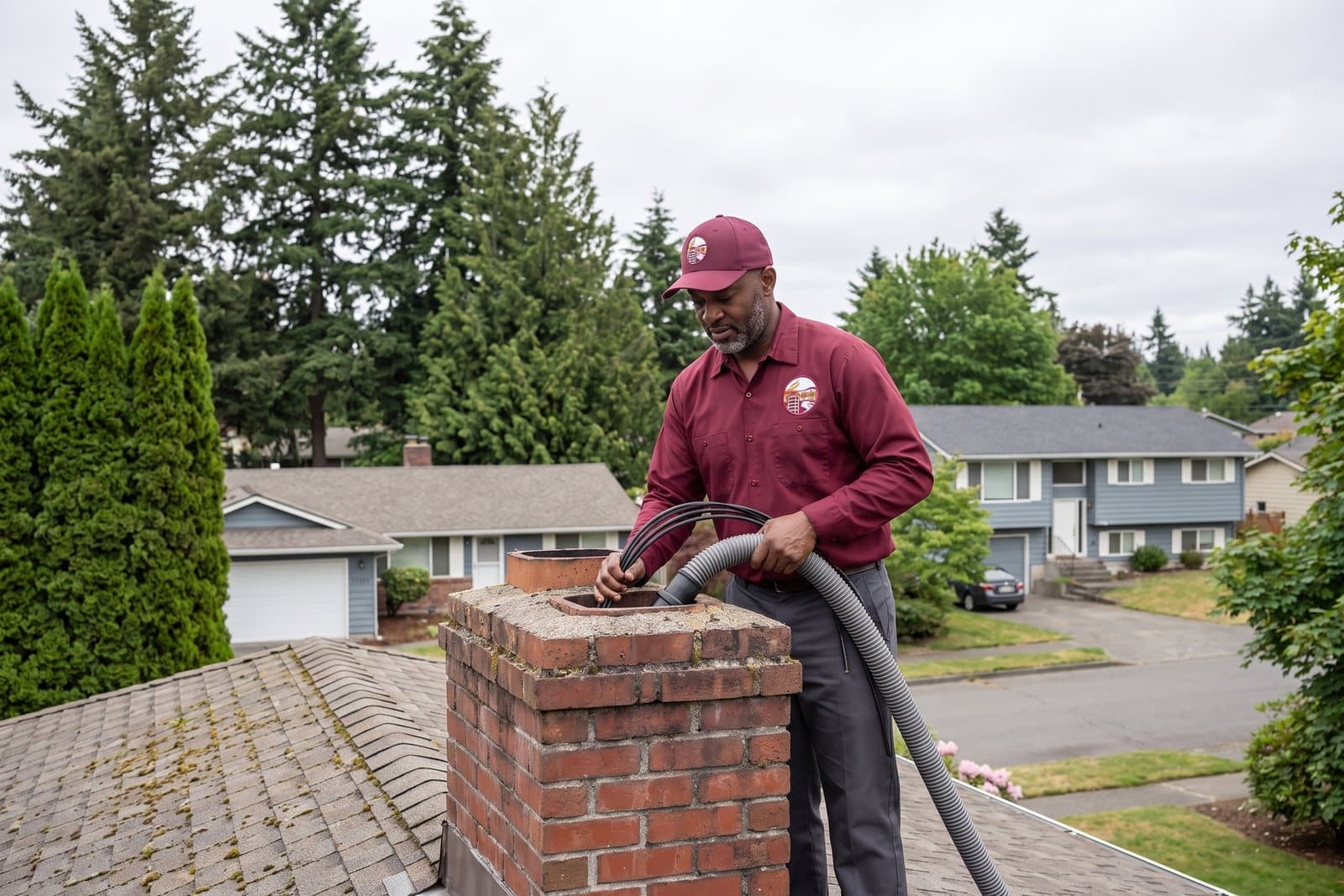
The flue brushed along its full height with heads chosen for its shape and material
Learn more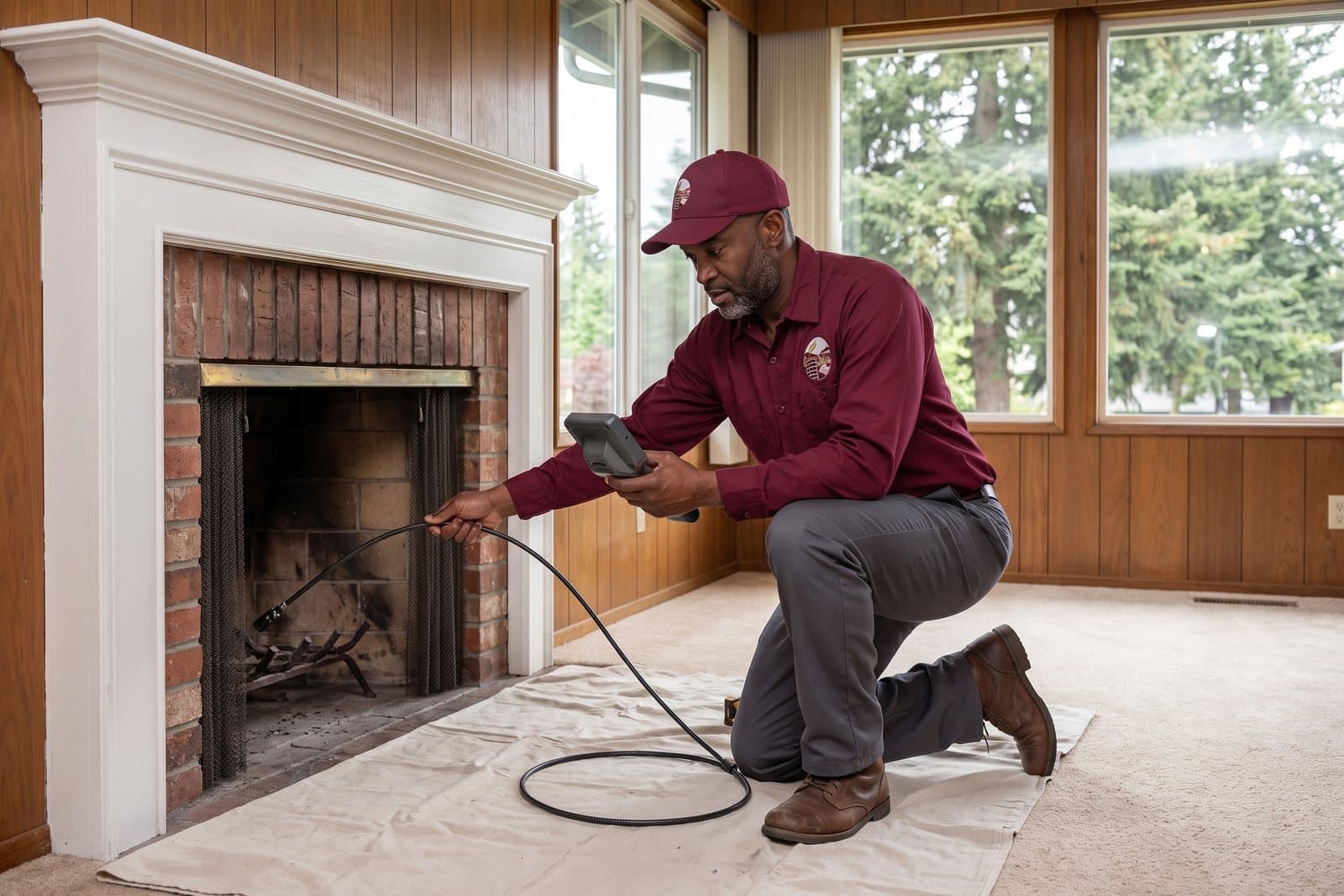
Level 1 review of the accessible parts, stepped up to a Level 2 camera pass when those parts cannot settle the question
Learn more
Video scan and measurement of the flue before a liner is specified
Learn more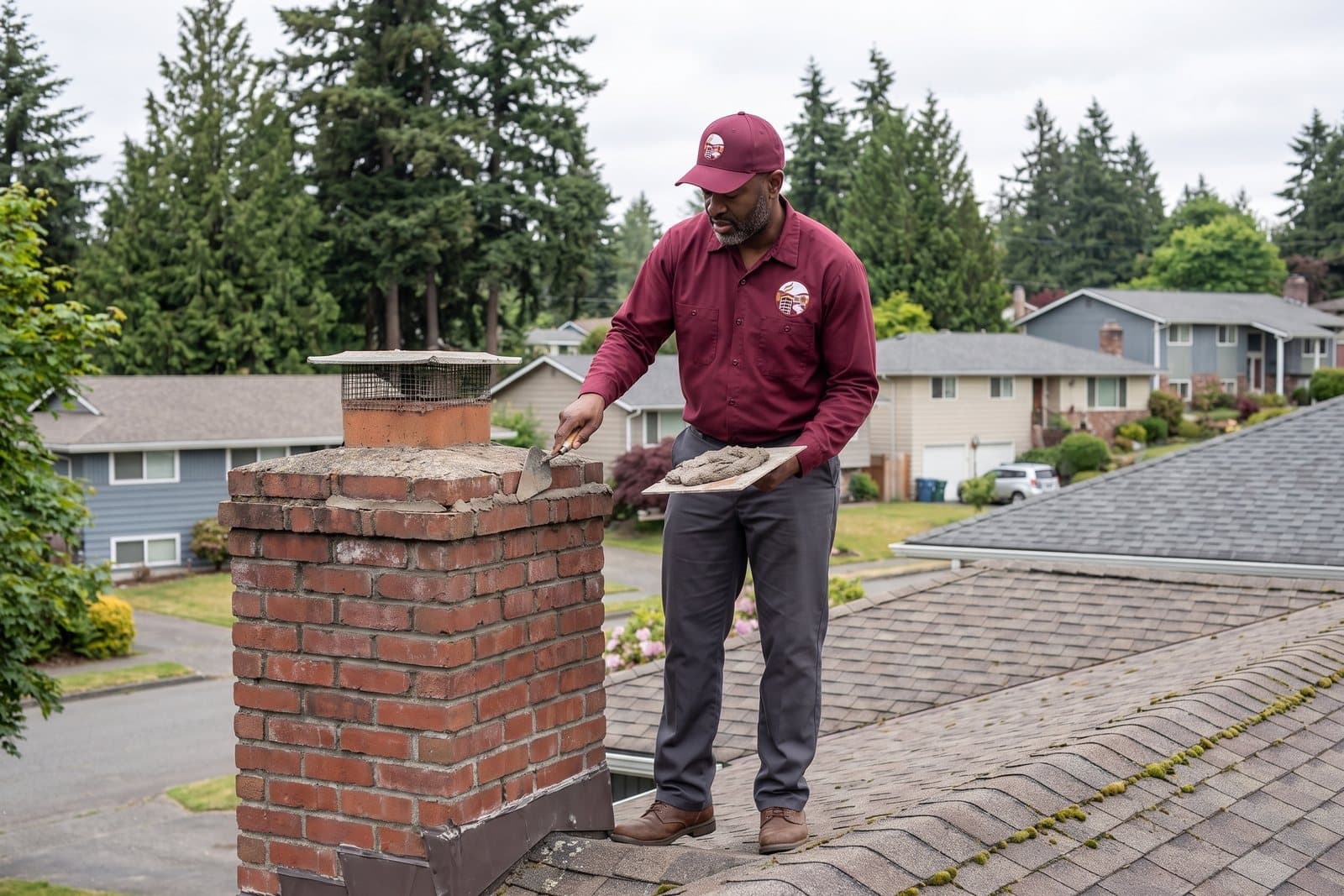
An assessment in photos that tells weathering apart from structural failure
Learn more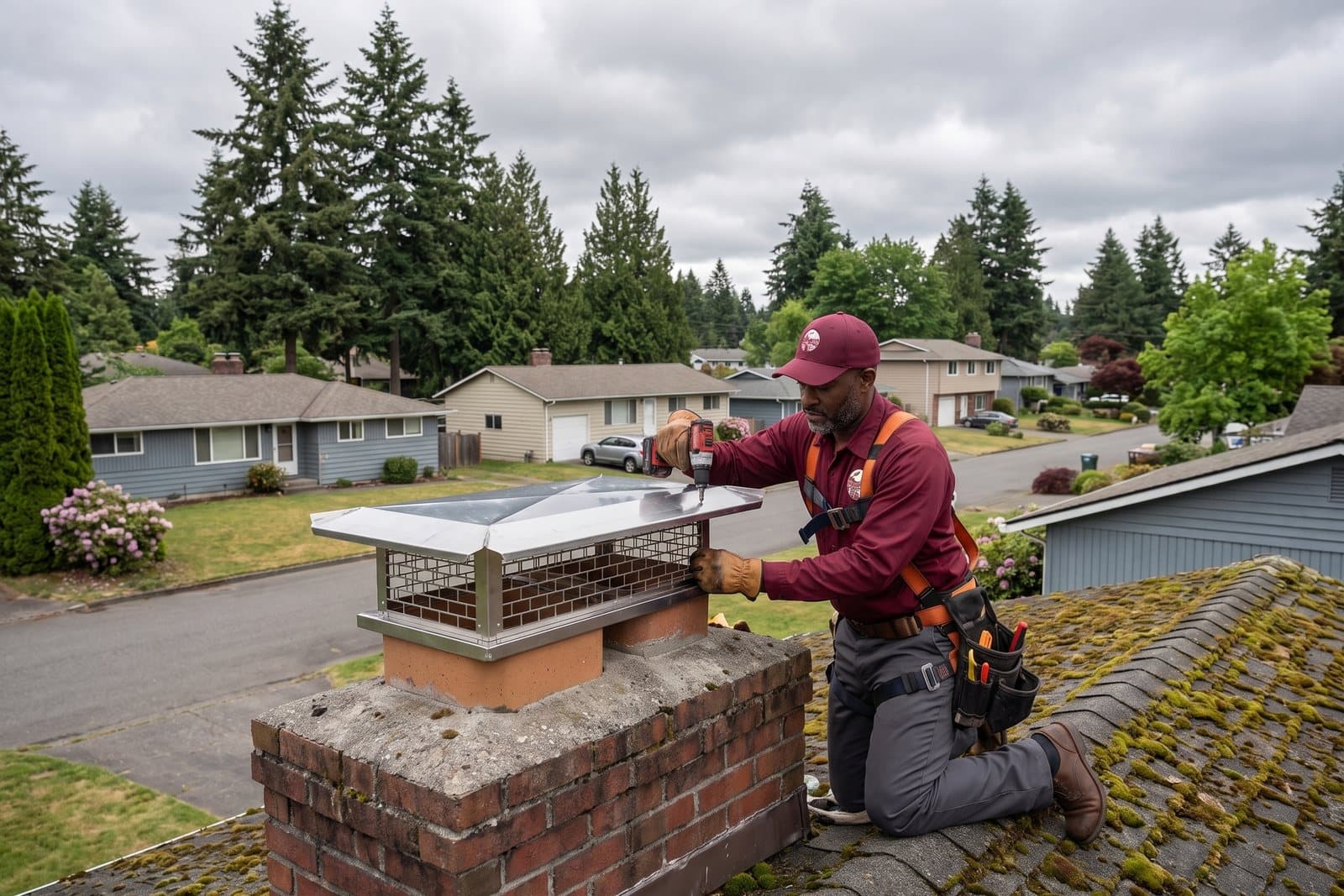
Each flue measured, or the whole crown when one cap will cover several flues
Learn more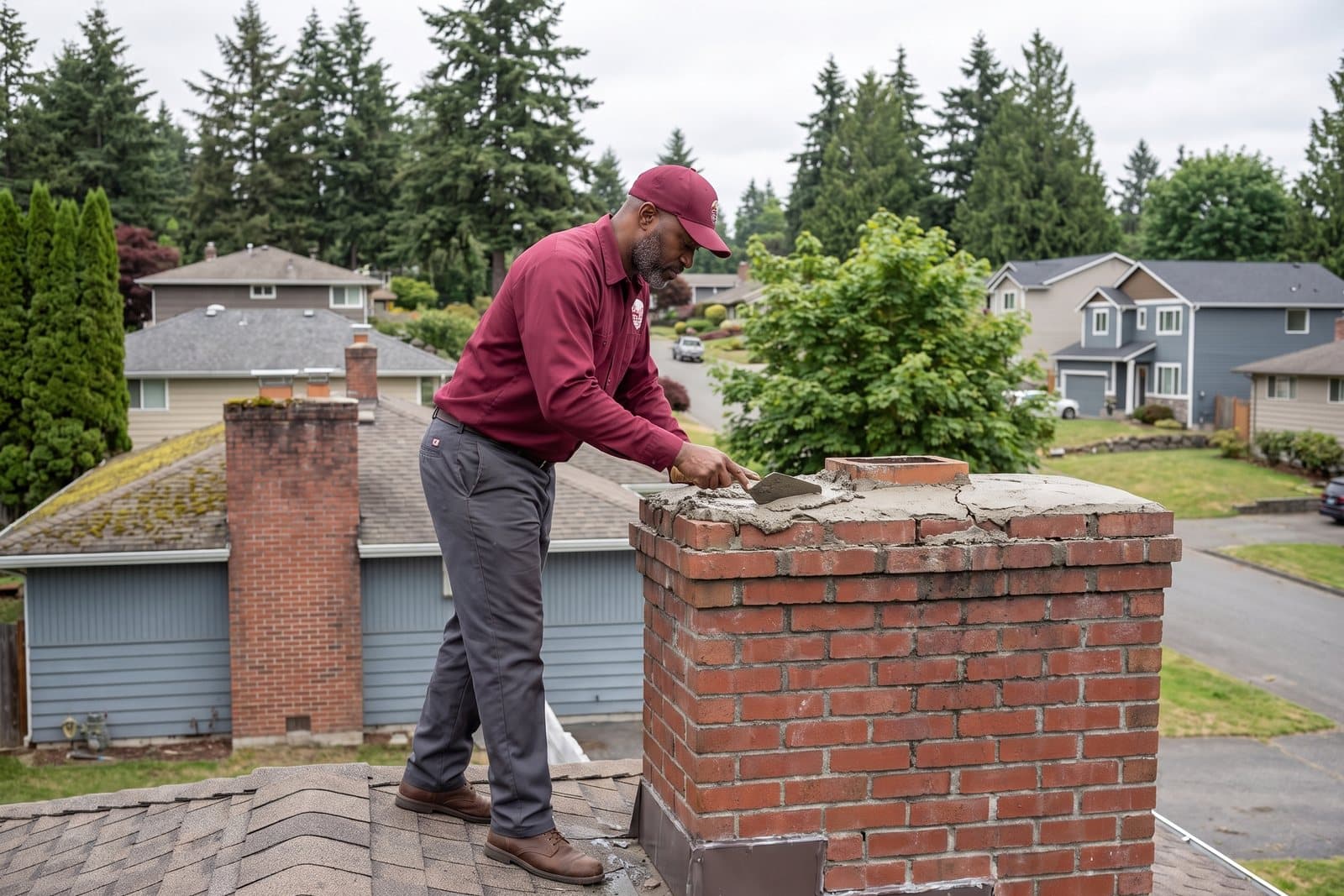
Photos of the crown and of all four faces before work begins
Learn more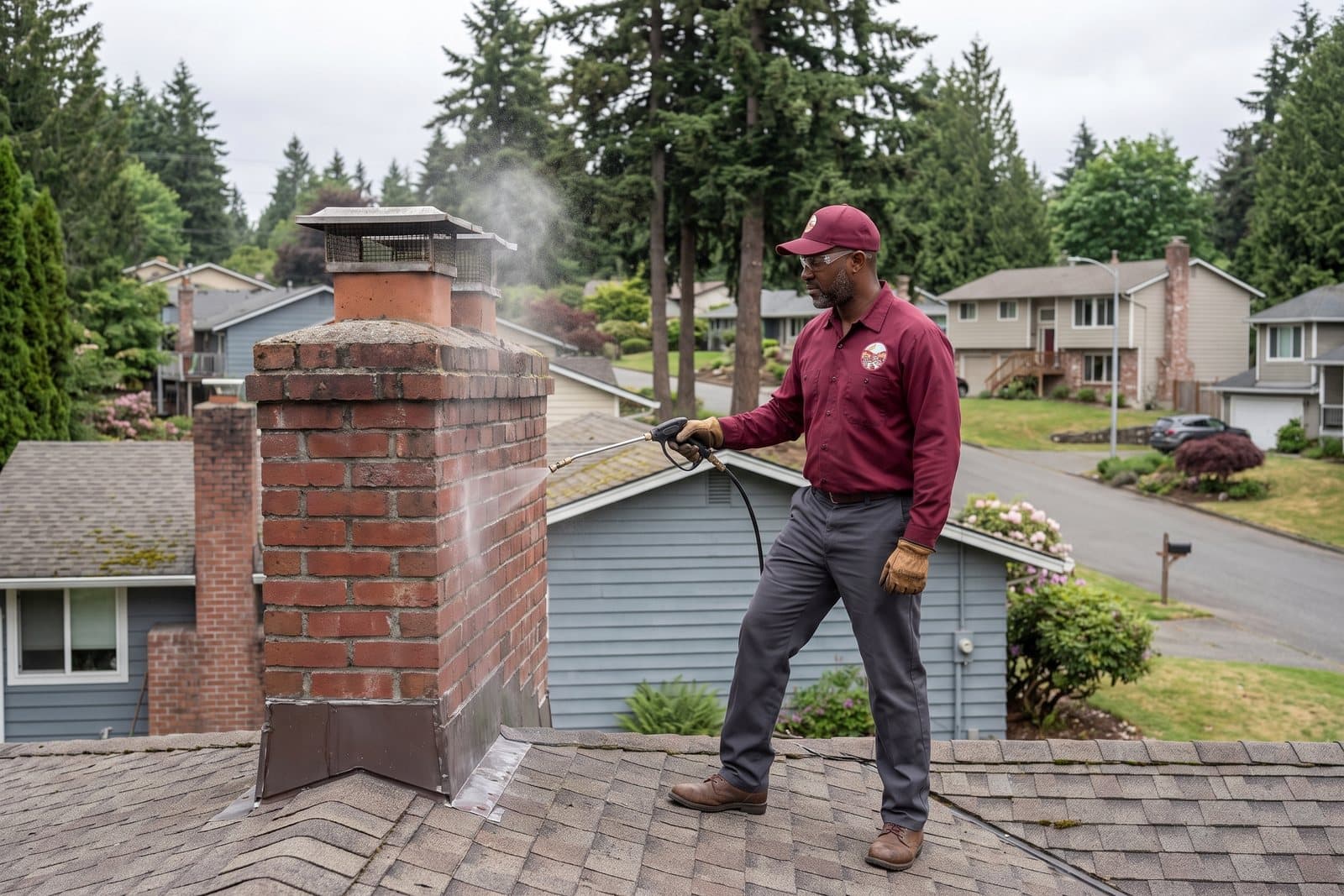
Brick, joints and crown checked for defects before any product is opened
Learn more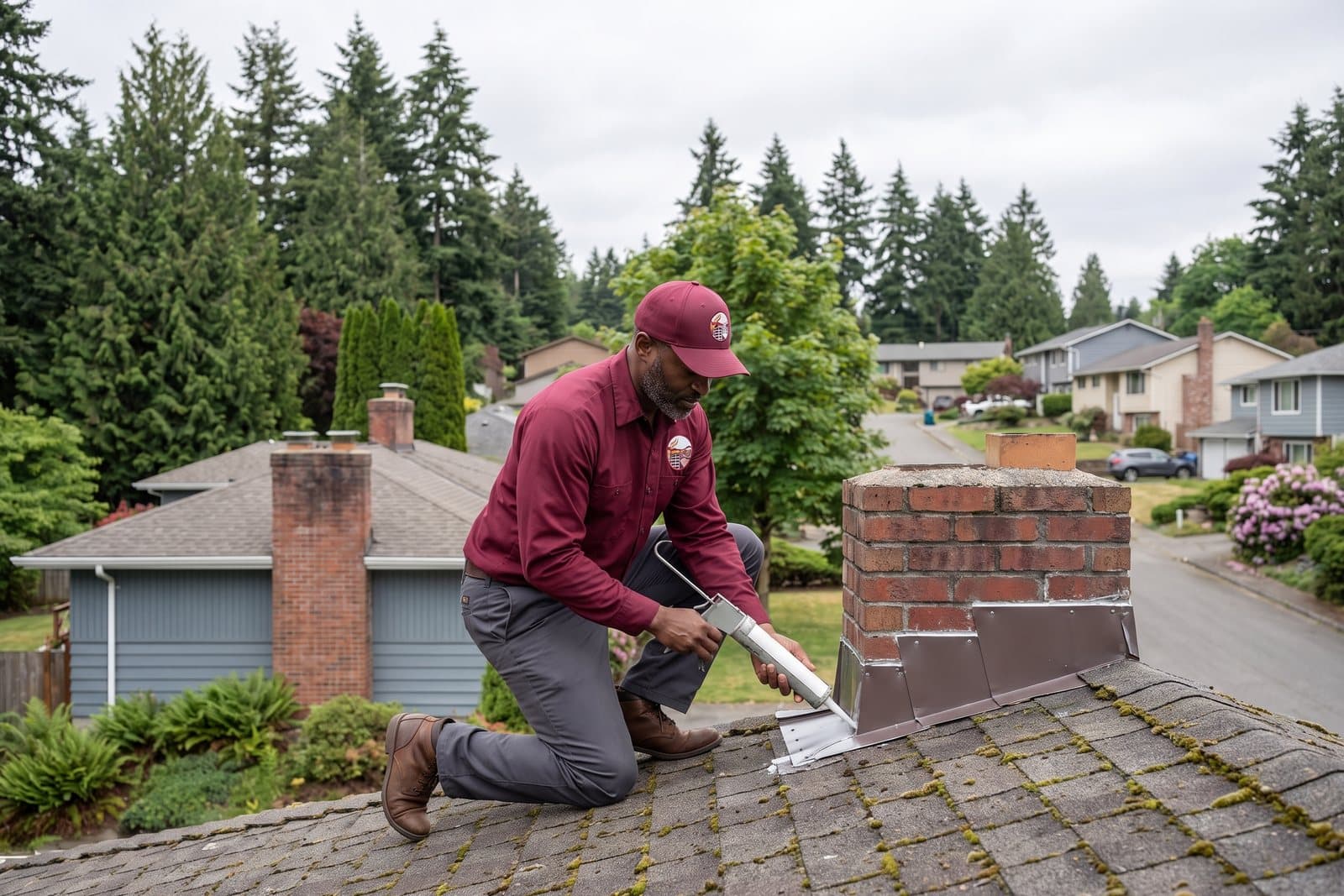
The leak followed from the stain back to its entry point, in the attic where there is access
Learn more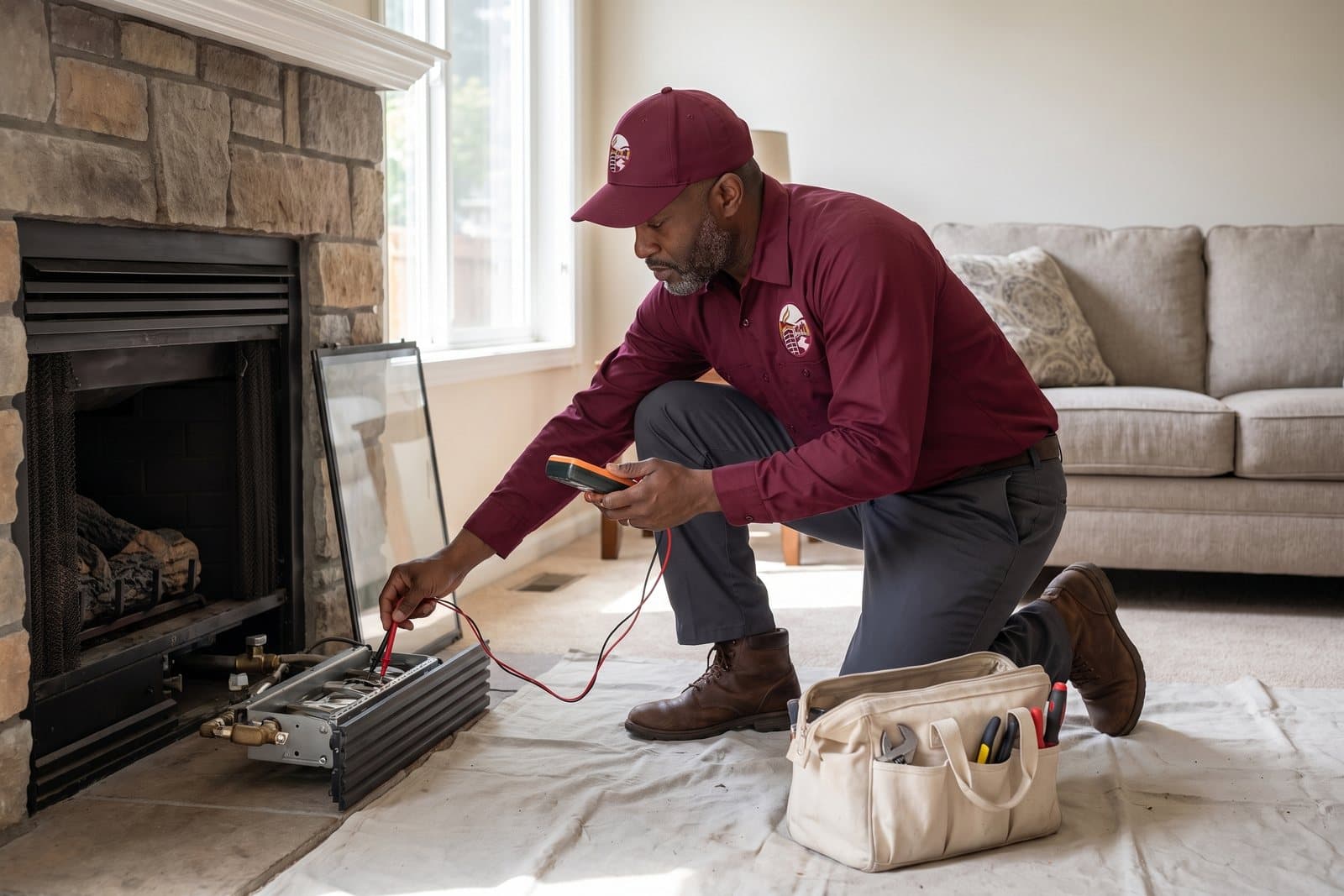
Burner, pilot assembly and igniter cleaned and tested
Learn more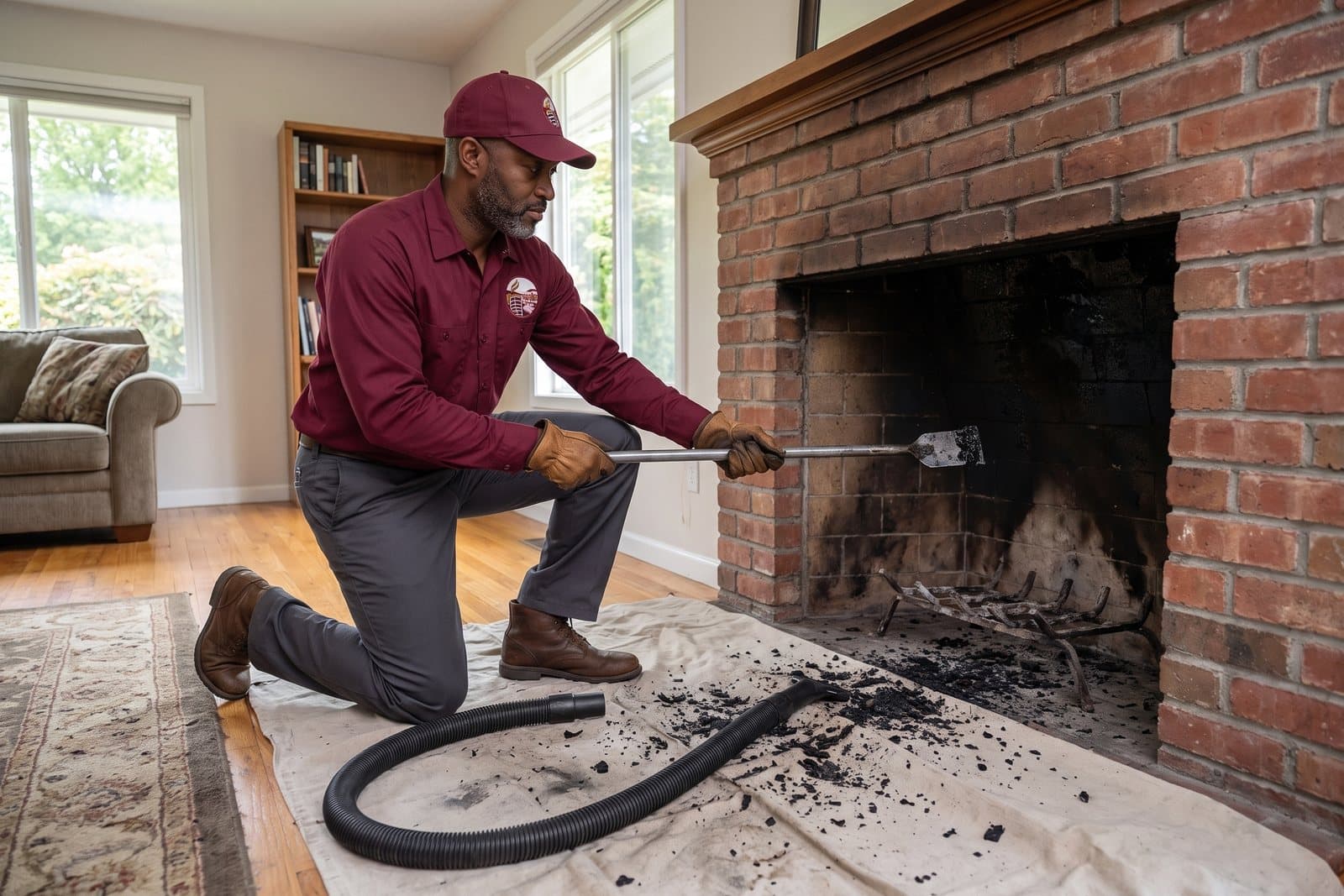
Video grading of the deposit and a note of where it sits
Learn more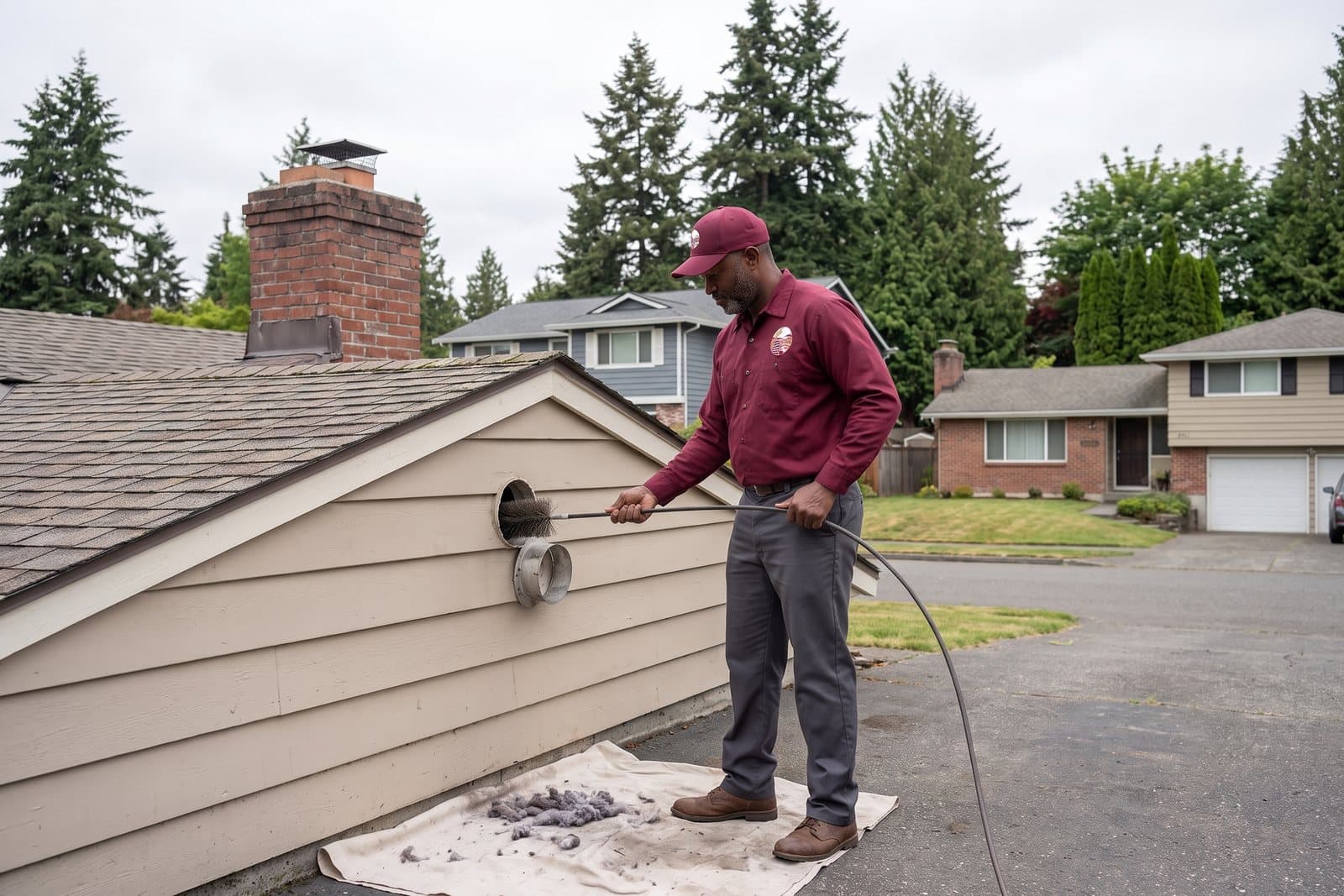
The full duct brushed with rotary rods and flushed with air
Learn more
All supply and return branches agitated while the system is under negative pressure
Learn moreRanges shown for orientation — the exact figure is written up on-site, after the inspection.
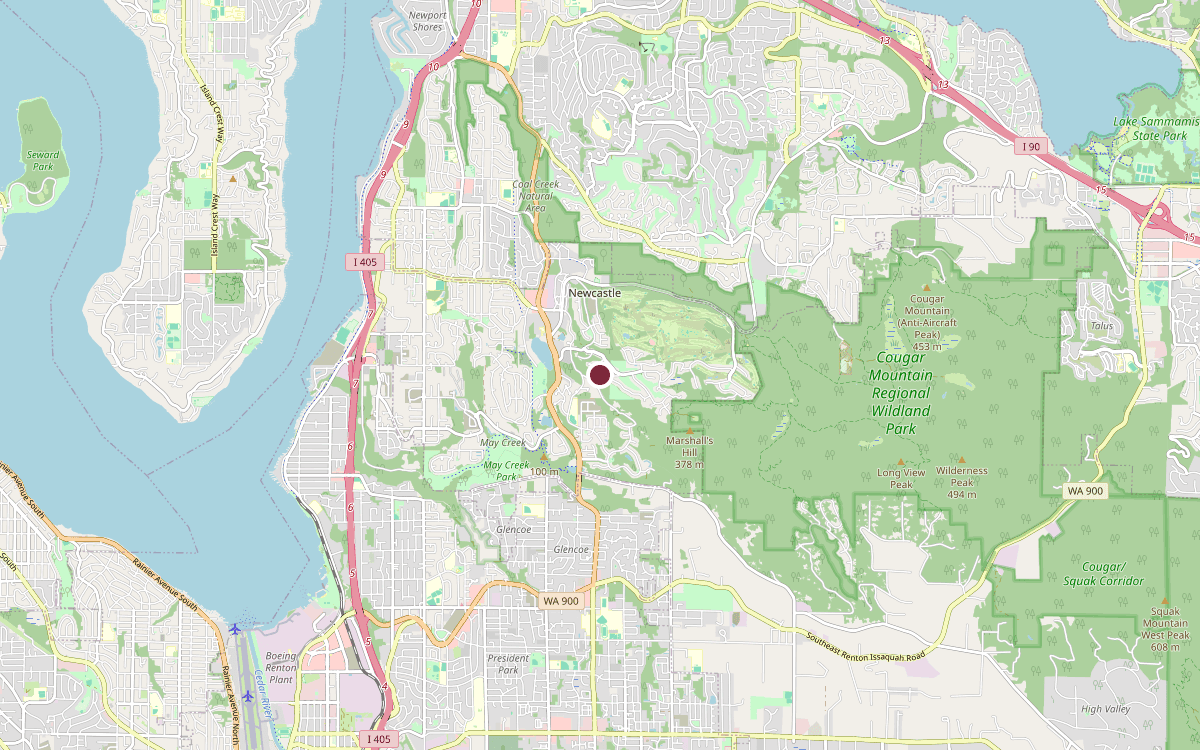
Service-area map — Newcastle, WA. Map data © OpenStreetMap contributors.
Newcastle had 13,940 residents on April 1, 2026 by the estimate of Washington's Office of Financial Management, against 13,017 for 2020 in that table. The office counts 6,009 housing units: 3,584 one-unit structures, 2,413 units in buildings of two or more and 12 mobile homes. In the Census survey the median home dates from 1999, sixteen years younger than King County's median of 1983, and owners occupy roughly 61 percent of the homes that are lived in. Newcastle's 4.2 square miles lie in the hills above Lake Washington, with Renton across May Creek to the south and Cougar Mountain Regional Wildland Park on its eastern side.
Coal was found along Coal Creek, on Cougar Mountain, on January 9, 1864. HistoryLink's account has the town of Newcastle running by 1878 and housing about 750 people by 1883. Close to 11 million tons of coal came out from under these hills in the century that followed.
Large-scale mining stopped in 1929. The two company towns, Old Newcastle and Coal Creek, mostly vanished during the 1930s; the city's hazard annex says that little survives of settlements that once counted as many as 600 houses, aside from abandoned mines and a single miner's residence in near-original condition.
The suburb came next. Work on the Newport Hills development, which took in the former townsite, started in 1958, and the community had an estimated 7,000 residents by the early 1970s. The city incorporated in 1994 as Newport Hills and took the name Newcastle less than three months afterward.
Census estimates break Newcastle's 5,723 surveyed housing units into clear layers. About 13 percent, 744 units, date from the 1960s and 1970s. A third, 1,909 units, were built in the 1980s and 1990s. Nearly half, 2,780 units, have gone up since 2000, and the 2010s alone account for 1,734. The survey's estimate of homes from before 1940 is zero.
The same data shows 1,263 units in buildings of fifty or more, so a sizable part of the newest housing has no private chimney at all. For the detached homes, we do not presume the type of fireplace from the decade: no public source sorts Newcastle's chimneys into masonry, factory-built or direct-vent gas, and each call starts with a look at what is actually there.
Electricity is the main heating fuel in about 49 percent of occupied homes and utility gas in 45.7 percent, according to the Census survey. Tank or bottled gas, propane for instance, heats another 242 households. The estimate for wood as a primary fuel is zero, give or take about twenty households.
Each household appears once in that table, under a single main fuel. It does not count fireplaces, so it cannot say how many Newcastle living rooms have one. It does suggest that a hearth here is mostly used for comfort on cold evenings, and that vents for gas appliances deserve as much attention as wood-burning flues.
The city estimates that roughly 420 acres in its northern and eastern parts are affected by abandoned coal mine hazards, and that most of that ground lies under open space and parks. We mention it because owners ask. It is a question for the city and a geotechnical engineer, not something a chimney technician can assess, and we say so when a crack pattern makes us think the ground deserves a second opinion.
Newcastle's hazard annex describes the terrain plainly. A valley with steep sides runs through the city, and its water leaves by two basins, Coal Creek's and May Creek's. Over half of its land area is constrained by critical areas. About 30 percent of its structures, 1,063 in all, lie within an erosion hazard area, and 126 structures, or 3.9 percent, within an identified landslide hazard area. View homes on steep slopes are named as susceptible to erosion.
Water in the open is a minor factor by comparison. Lake Boren rises in periods of heavy rain and about five homes on its north shore sit near high winter levels, but the 100-year floodplain covers only around 12 acres, under 1 percent of the city.
For chimneys, slope matters in three practical ways. A stack on the low side of a house is taller and more exposed than its twin on the street side. Access is harder, which affects how work is staged and priced. And movement in the ground shows up early in rigid masonry, so a leaning stack or a gap at the wall is worth reporting even when the fireplace works. WeatherSpark's summary puts the elevation change within two miles of Newcastle at 1,198 feet.
Dense woods, whether natural areas or protected native growth, sit at the edge of many Newcastle lots, the annex notes, and it lists Cougar Mountain Regional Wildland Park, the Coal Creek Natural Area and May Creek Park among the wooded lands the city's neighborhoods adjoin. Wind events that bring trees down and cut power occur every couple of years, by the same account.
Oregon State University Extension considers roof moss inevitable in the moist Northwest. Its guidance is that moss does no direct damage to roofing; the trouble lies in what it collects, soil and litter, and in the water that stays with them. For a durable cure it recommends cutting back the trees around the house so the roof gets sun. It also cautions that careless pressure-washing harms shingles and that zinc sulfate treatments corrode copper gutters and flashing.
On a chimney, the equivalents are a cap screen matted with needles, a crown that never dries and a pile of litter lodged behind the stack. None is dramatic. All three keep masonry and metal wet through the darkest part of the year: WeatherSpark rates December, the cloudiest month, as overcast or mostly cloudy roughly three-quarters of the time (74 percent).
According to Newcastle's hazard annex, the Seattle fault zone sends three active faults across the city. The same document finds no liquefaction zones inside the city limits, and it identifies 708 buildings constructed before 1974 as low-code structures, the group most susceptible to earthquake damage.
Washington's Department of Natural Resources gives the regional odds as of 2025: over the coming 50 years the Puget Sound region faces 85 percent odds of a deep quake reaching magnitude 6.5, a 17 percent chance of a shallow crustal one of that size, and a 15 percent chance of a magnitude 9 subduction earthquake.
The state's 2021 residential code, at R1003.3 and R1003.4, applies to Seismic Design Categories D0, D1 and D2: there a masonry chimney needs reinforcing steel, plus anchorage wherever it meets a floor, a ceiling or the roof higher than six feet off the ground. We could not read a source giving Newcastle's design category, so we do not state one; the city's building department assigns it. What we can do on any visit is report whether an older stack shows the anchoring straps and the sound mortar that keep it attached to the house when the ground moves.
The grid we quote from for Newcastle homes — the $99 inspection comes first, the written quote before any work.
| Service | Price in Newcastle | What that covers |
|---|---|---|
| Chimney Sweep | $189–$459 | Full flue swept, Level 1 inspection included |
| Chimney Inspection | $99 plus tax | Level 1 visual; Level 2 adds a full camera scan |
| Chimney Relining | From $1,900 | Full-length stainless liner, sized to the appliance |
| Chimney Repair | From $375 | Masonry repair — brick and mortar, scoped after diagnosis |
| Chimney Cap Installation | $265–$850 | Stainless cap fitted; multi-flue and custom at the top |
| Masonry Repair (Crown / Repointing) | From $425 | Crown work, repointing and tuckpointing by surface area |
| Chimney Waterproofing | $320–$795 | Breathable sealer — reapplied every 3–5 years in this climate |
| Chimney Flashing Repair | $330–$1,500 | Reseal at the low end, full flashing replacement at the high |
| Gas Fireplace Service | $189–$475 | Annual service and tune-up; repairs quoted after diagnosis |
| Creosote Removal | From $245 | Priced by creosote stage — glazed stage 3 is the heavy end |
| Dryer Vent Cleaning | $105–$259 | Full run cleaned; roof or upper-floor terminations at the top |
| Air Duct Cleaning | From $535 | Whole HVAC system — trunks, branches and every register |
Ranges are what these jobs are quoted at in Newcastle. The exact figure is set on site after a $99 inspection (credited toward the job if you go ahead), and you approve it before any work starts.
Before and after
Illustrations of what each repair changes on a typical chimney — not photos of a specific job.
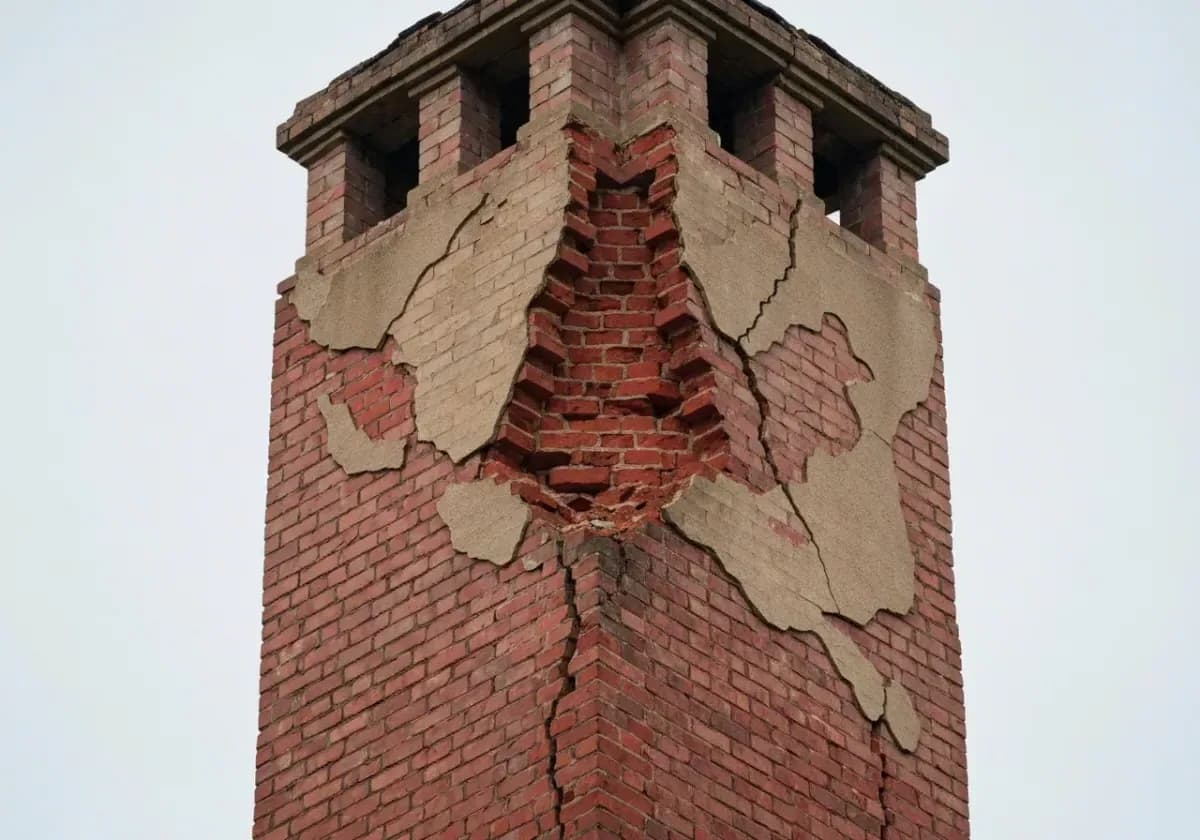 Before
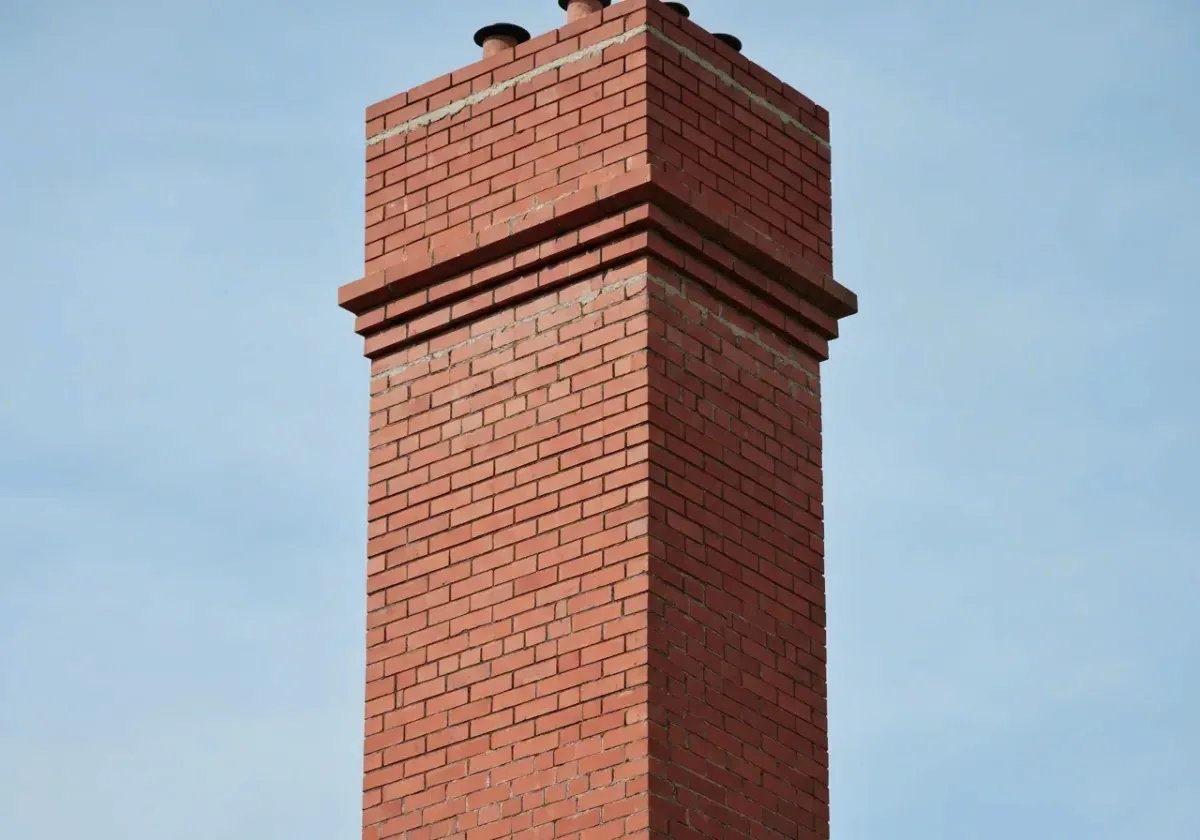 After
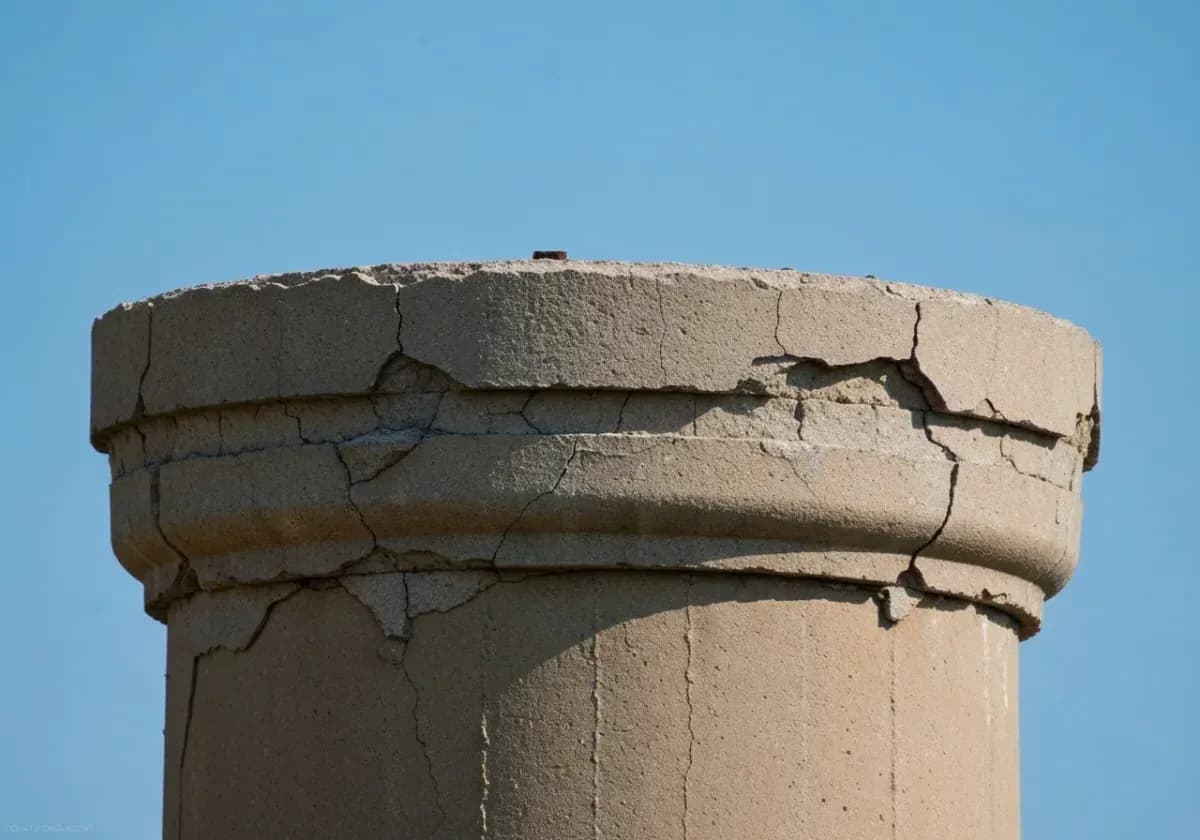 Before
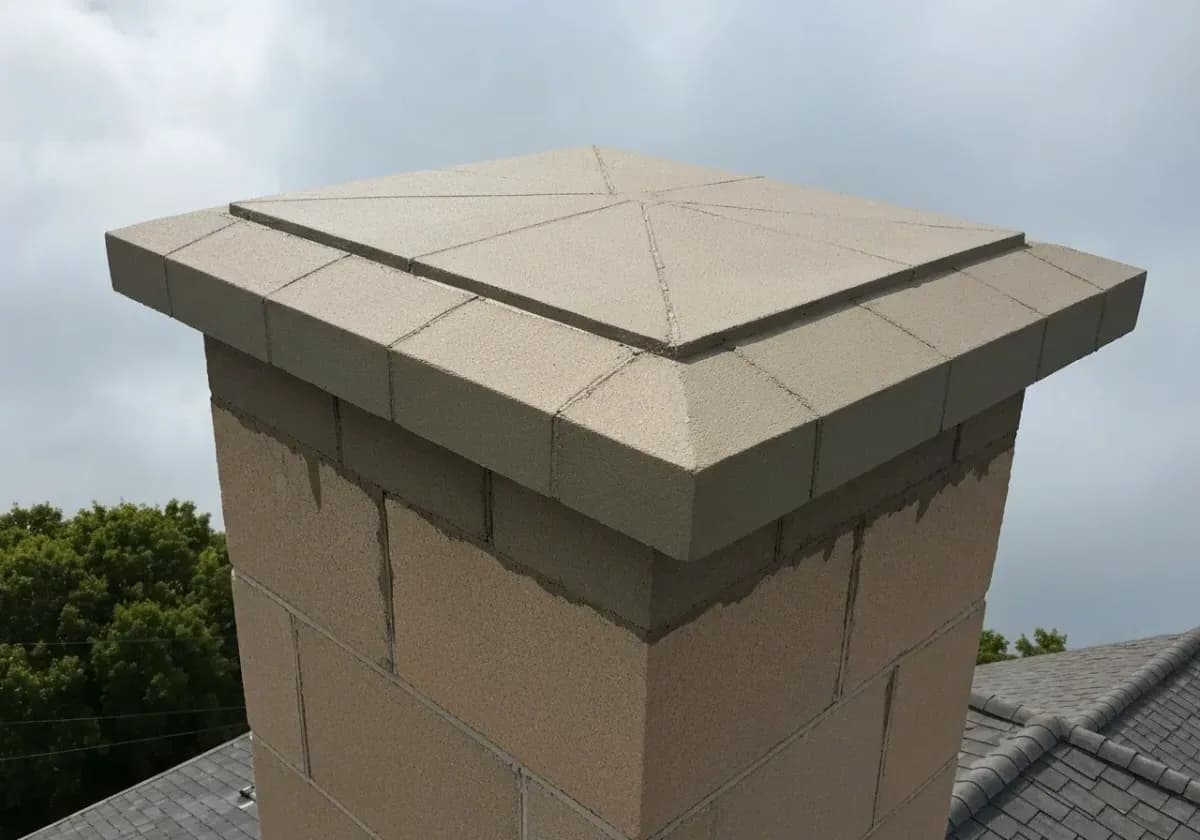 After
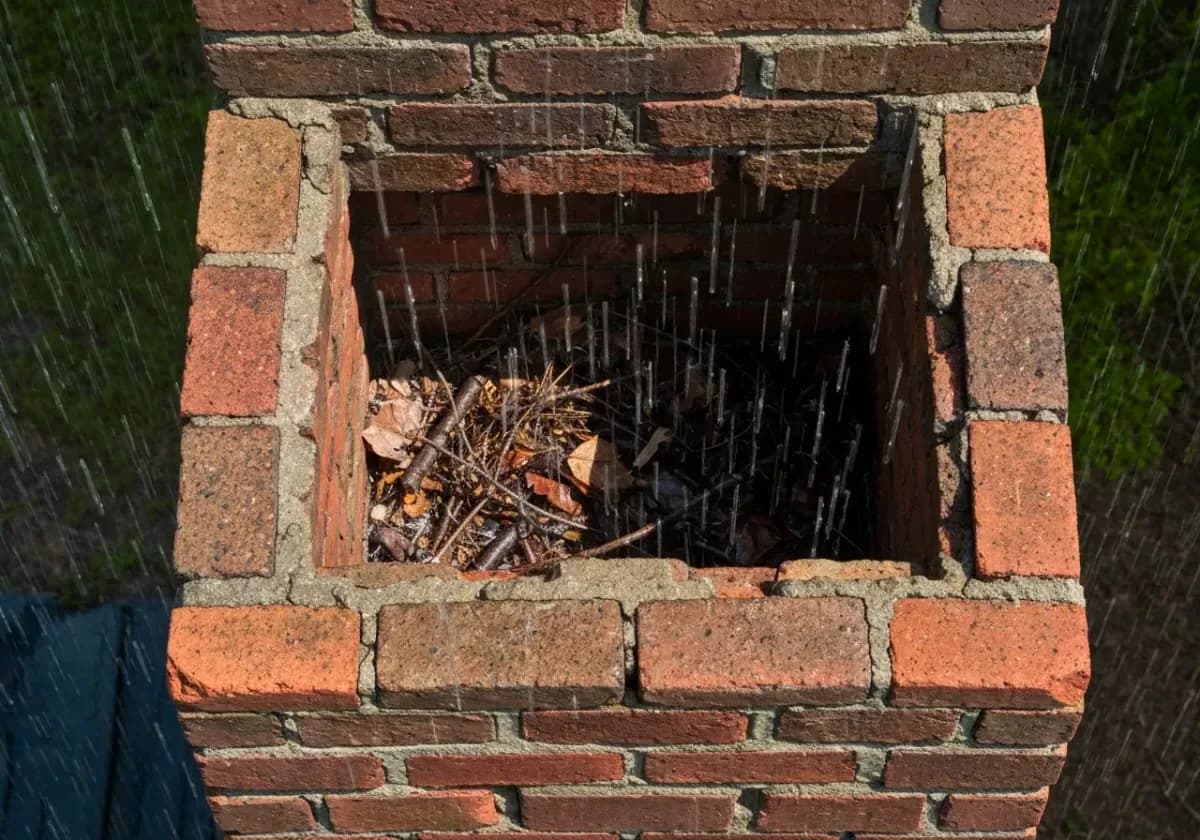 Before
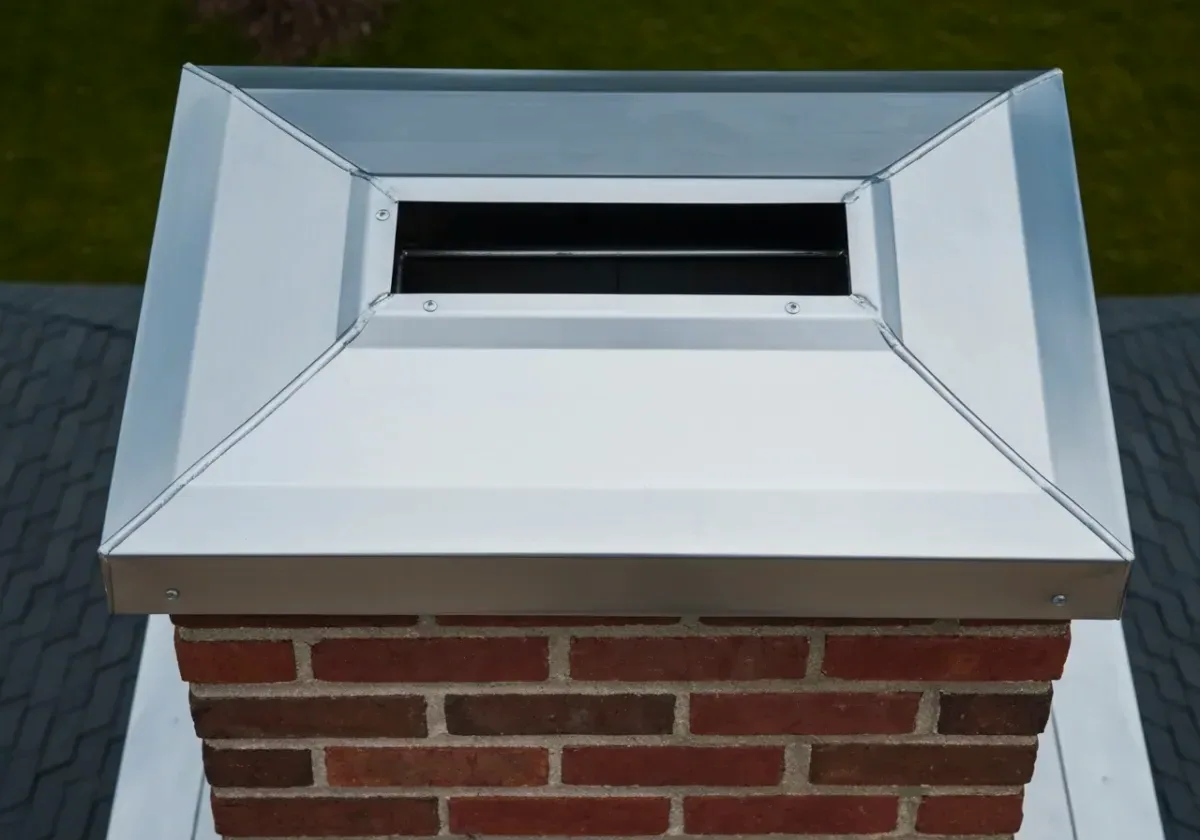 After

Four steps, each one on paper — so you always know what happens next.
Choose a genuine opening on the crew's calendar. Confirmation is immediate.
Liner, crown, cap, flashing and masonry examined in order — each finding photographed.
One document, plain numbers, covering only the work your chimney genuinely needs.
The repair is completed, then handed over with before-and-after photos of every item.
We cannot give a general rule. Since June 2026 the city takes permit applications through OpenGov, and among the city pages open to us none spelled out what chimney, stove or fireplace work has to be permitted. The permit desk answers for a specific address, and we provide the documents it asks for.
Yes. Newcastle lies in King County, and for that county it is Puget Sound Clean Air Agency that calls a burn ban when air quality demands one. A Stage 1 ban idles open wood fireplaces plus whatever stove or insert carries no certification; Stage 2 widens it to certified appliances and pellet stoves alike.
None that the city knows of, according to its hazard annex. It still classes 708 buildings from before 1974 as the most susceptible to earthquake damage.
$99 plus tax, counted chimney by chimney, pays for the on-site inspection. Go ahead with our quote and $99 comes off the job; say no, and the fee you paid is simply kept.
Choose a genuine opening on the crew's calendar. We inspect, quote in writing, and hand over a photo record of every repair.