Maple Valley, King County
Chimney work in Maple Valley is shaped by three things: trees, rain and the age of the houses. This is the most wooded of the four cities we serve and one of the newest, so the typical call is about a system that is twenty-five years old and has spent every one of those years under fir needles. Every job opens with an on-site visit, charged per chimney at $99 plus tax; approve the written quote afterward and those $99 count toward the work.
Book an inspection
Book your $99 inspection
$99 plus tax, deducted when you approve the repair
Not sure where to start
Pick what you're seeing at your Maple Valley home — we'll point you to the right fix.
What we do
The same crew, the same written quote — for Maple Valley homes.
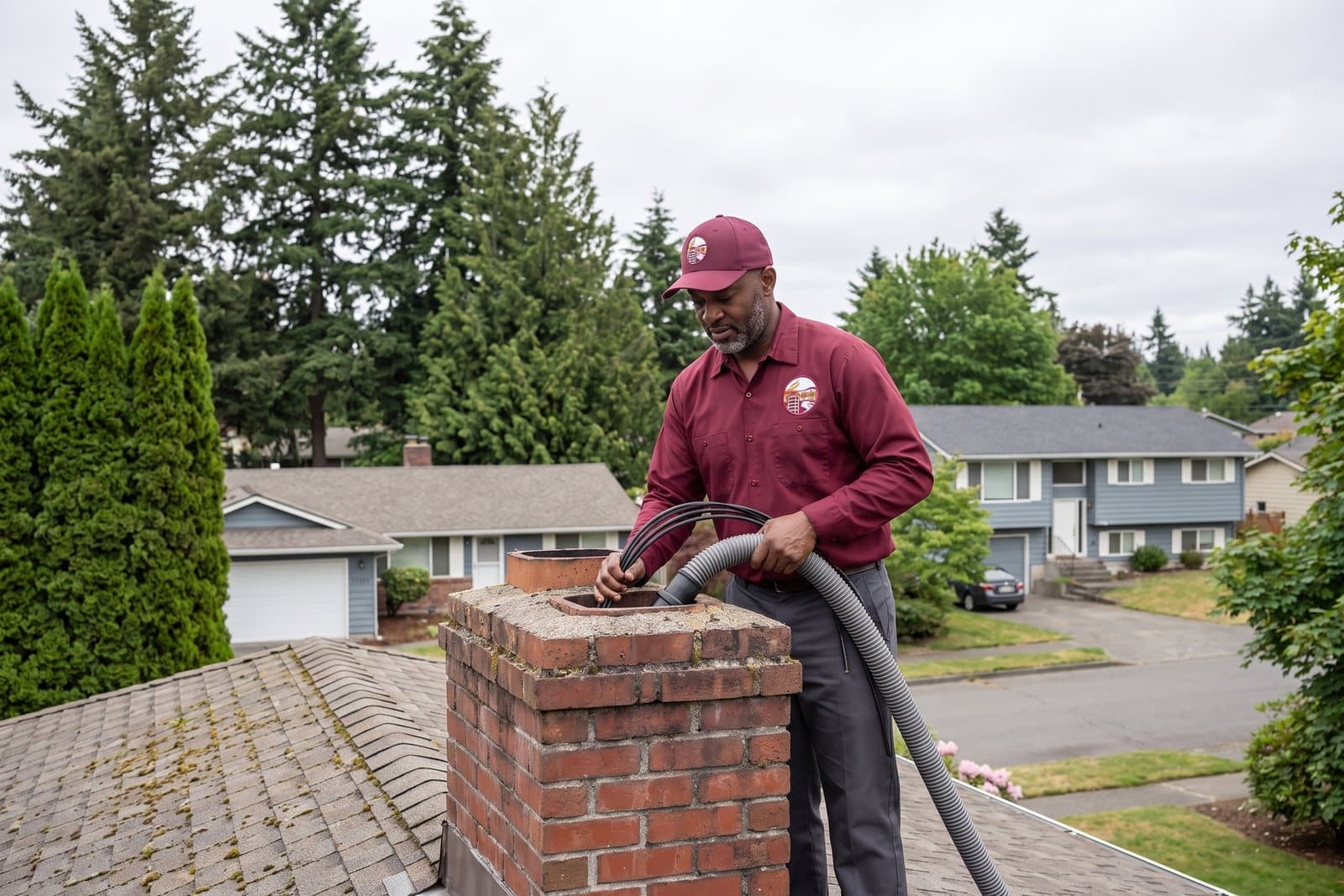
The flue brushed along its full height with heads chosen for its shape and material
Learn more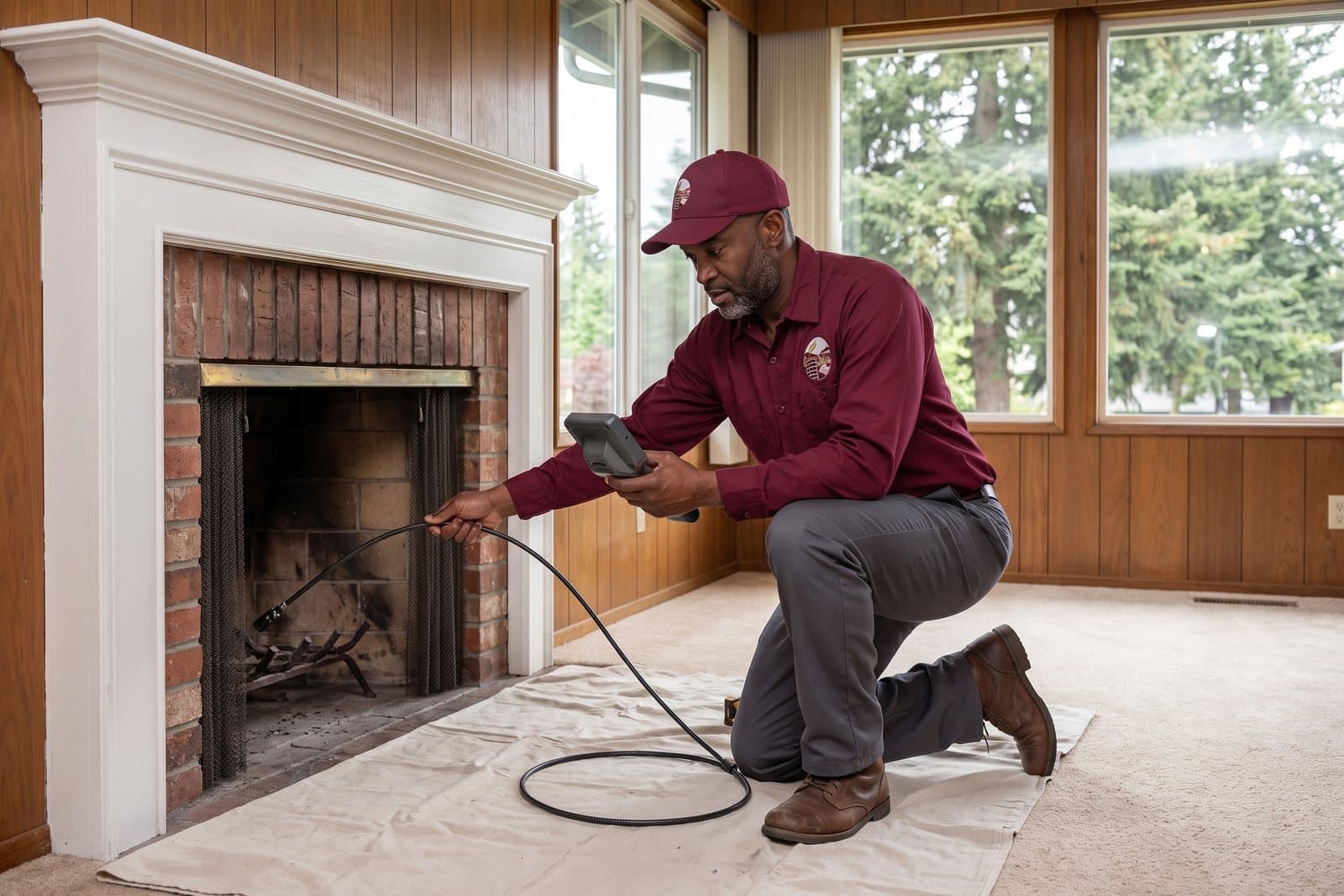
Level 1 review of the accessible parts, stepped up to a Level 2 camera pass when those parts cannot settle the question
Learn more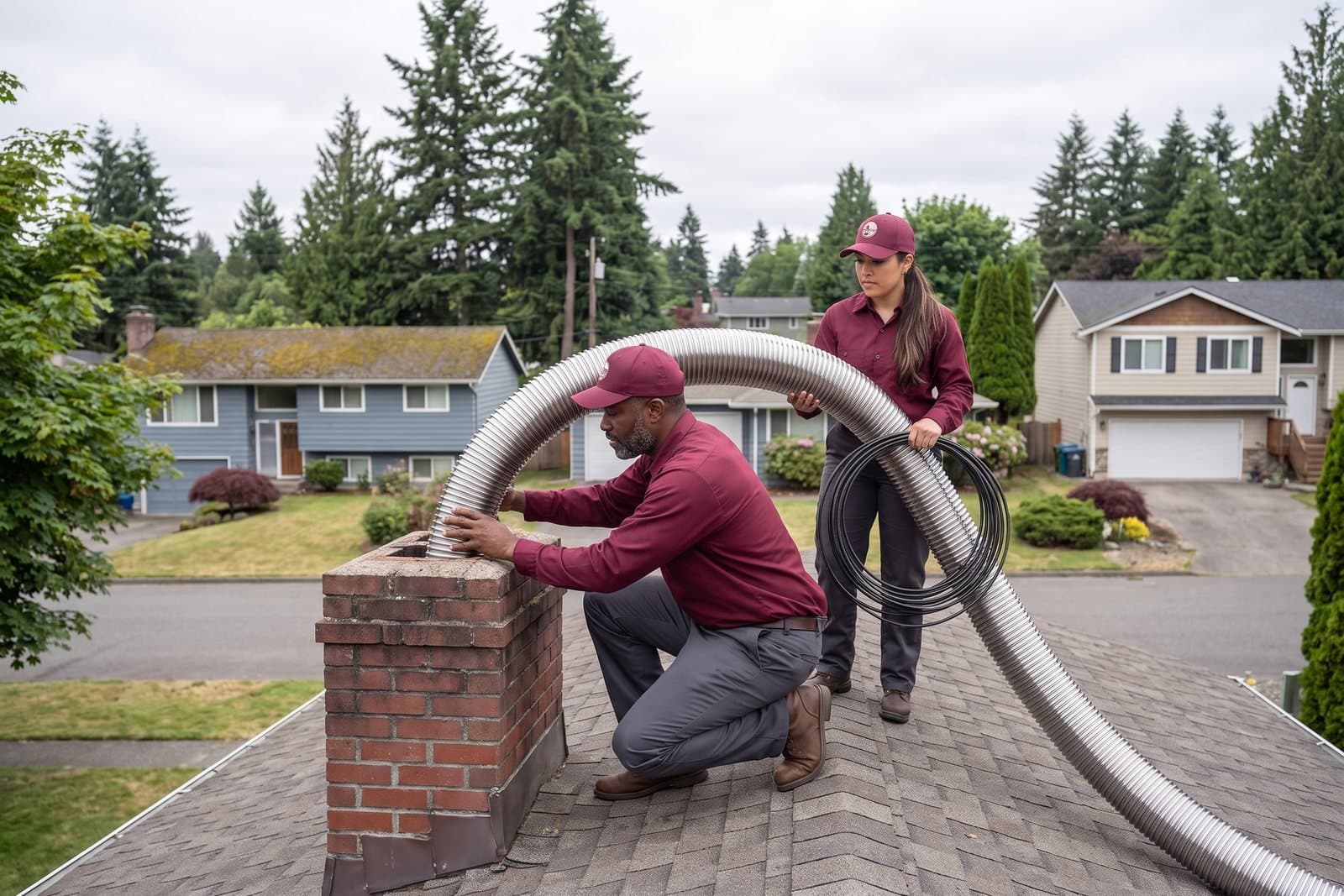
Video scan and measurement of the flue before a liner is specified
Learn more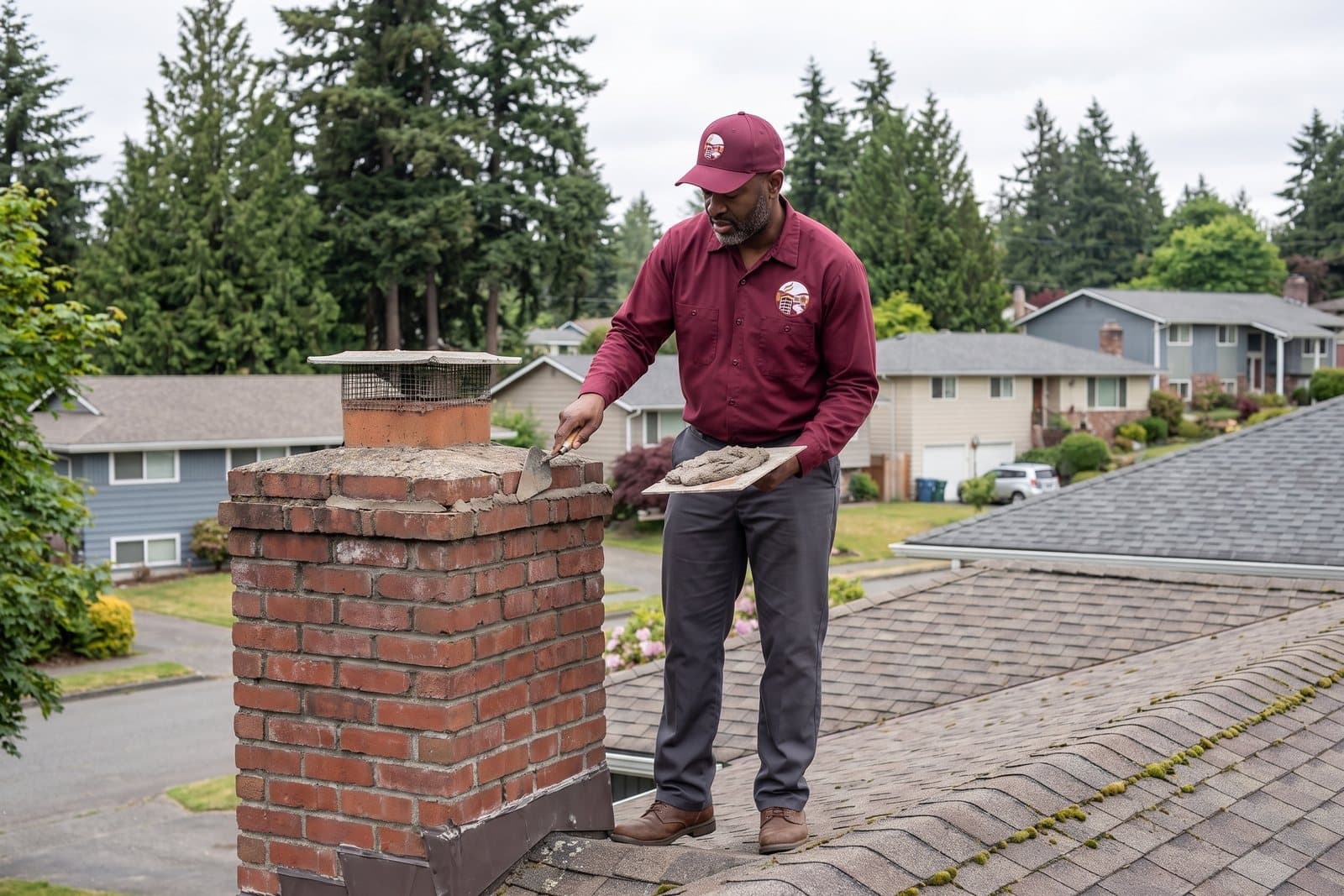
An assessment in photos that tells weathering apart from structural failure
Learn more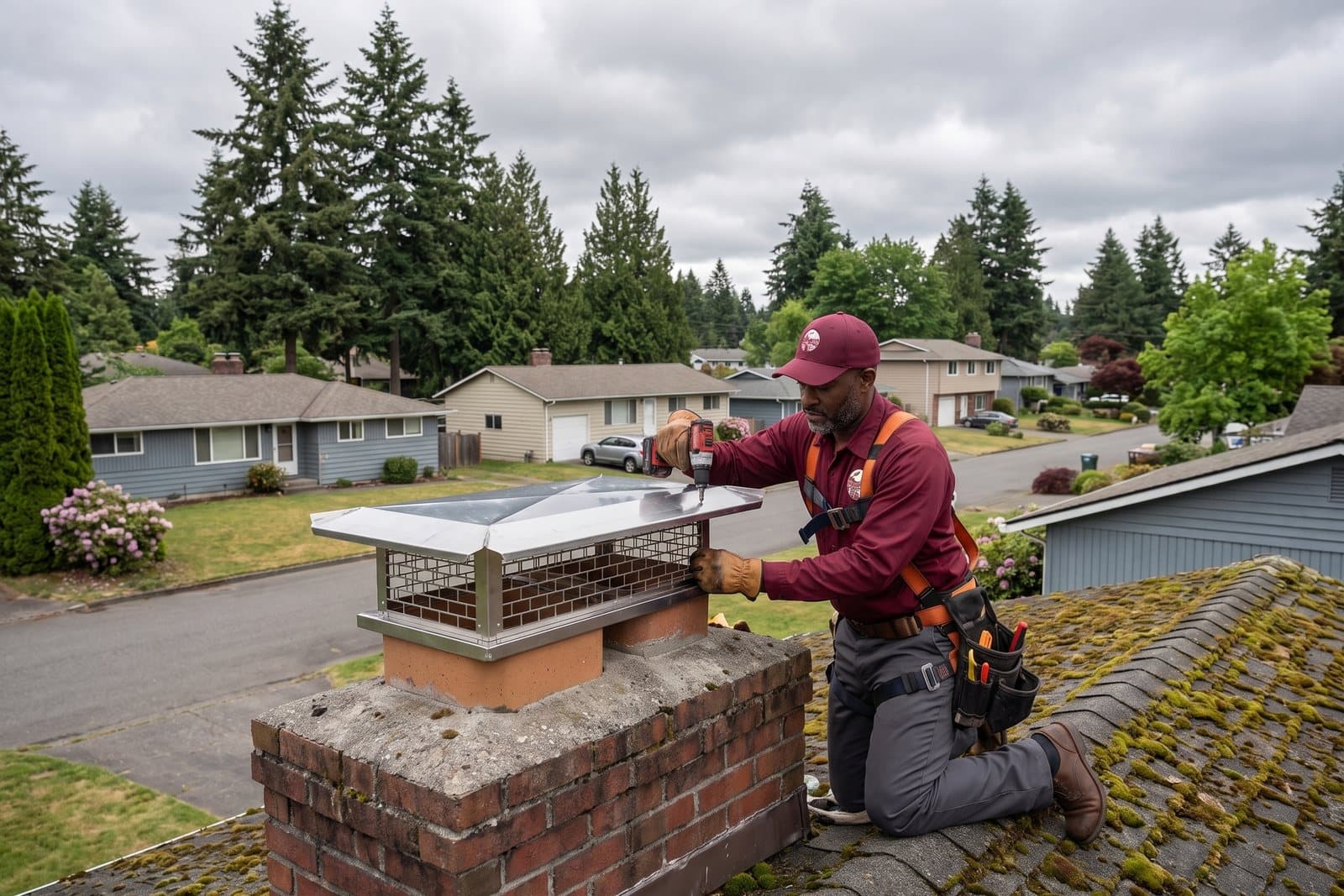
Each flue measured, or the whole crown when one cap will cover several flues
Learn more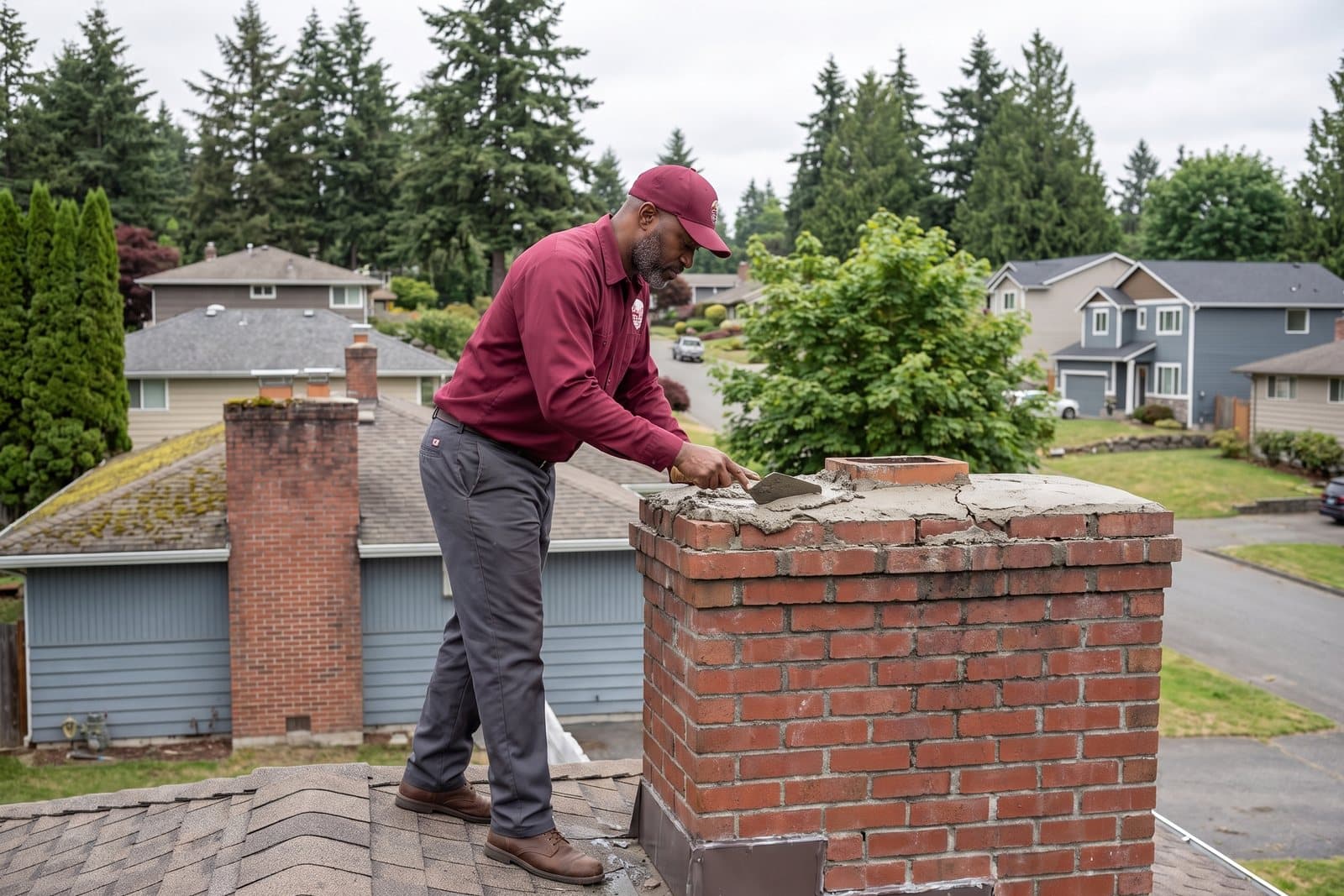
Photos of the crown and of all four faces before work begins
Learn more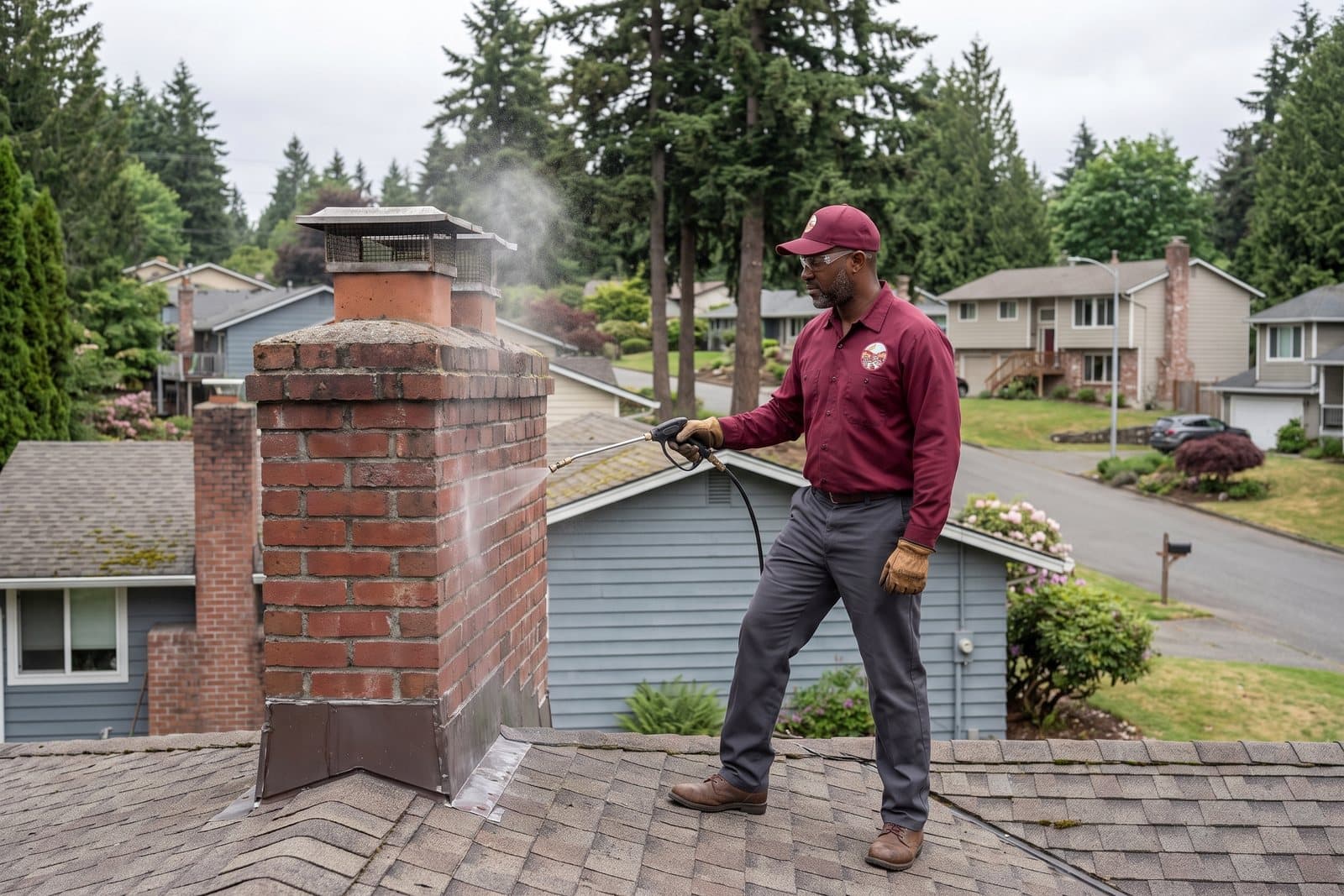
Brick, joints and crown checked for defects before any product is opened
Learn more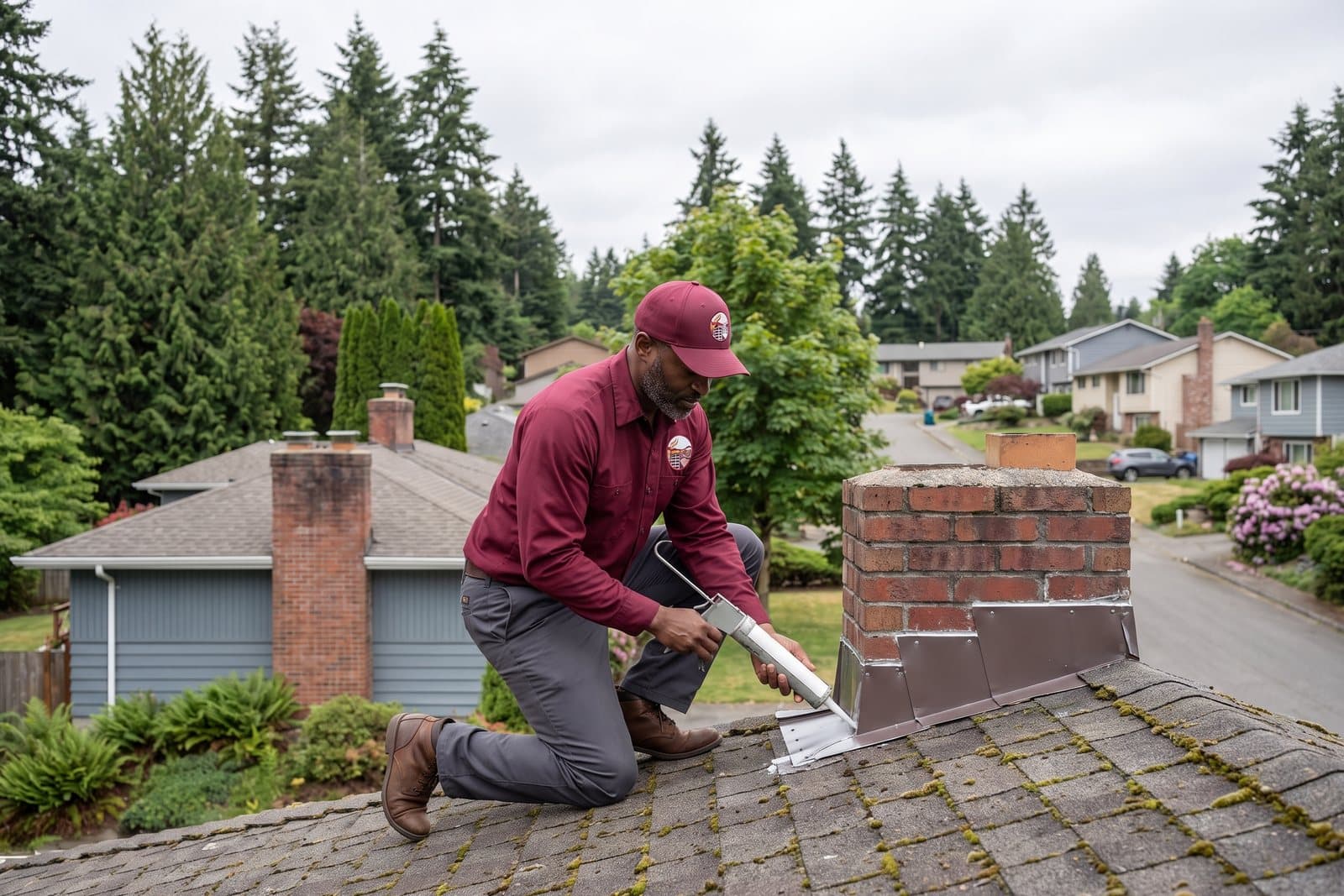
The leak followed from the stain back to its entry point, in the attic where there is access
Learn more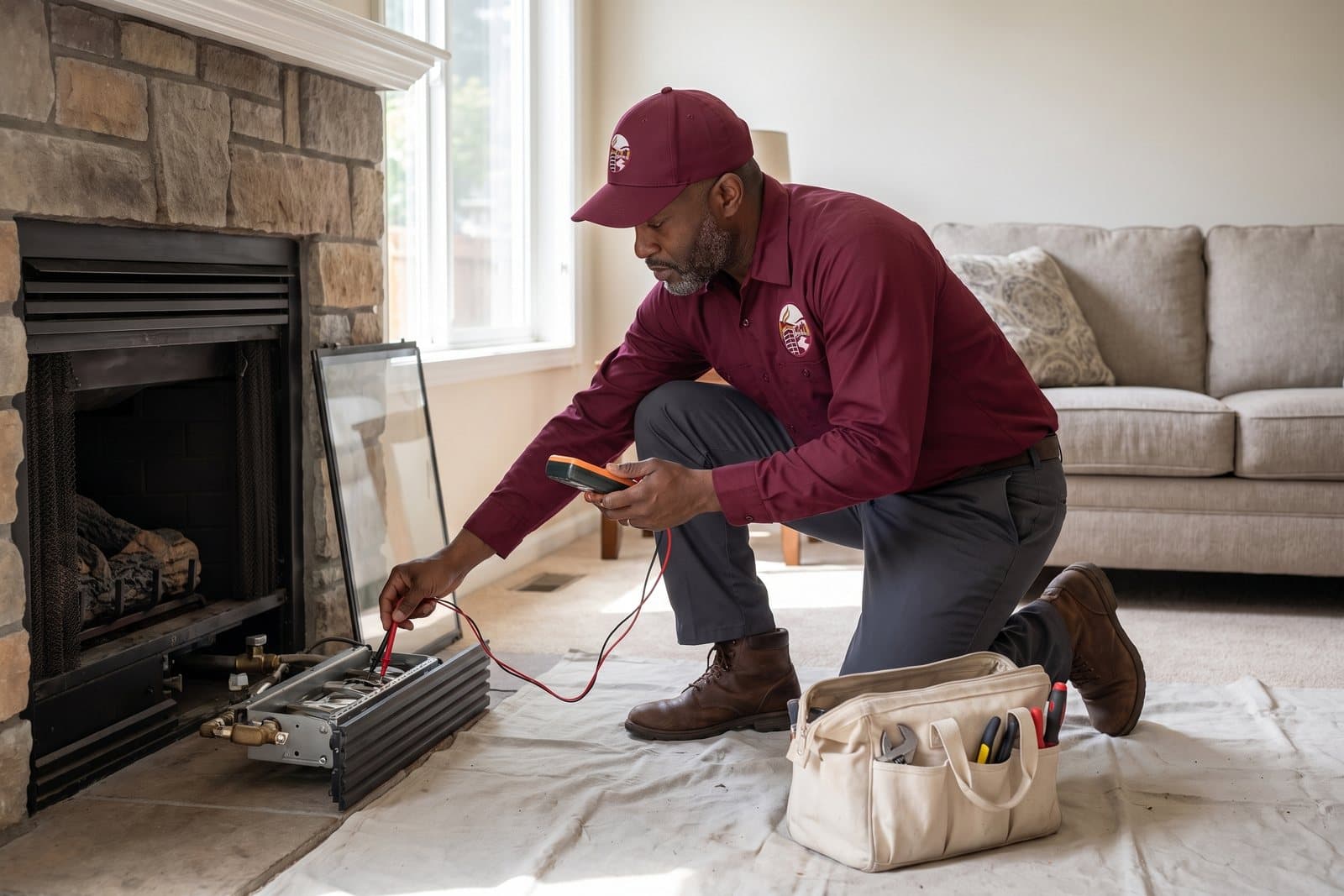
Burner, pilot assembly and igniter cleaned and tested
Learn more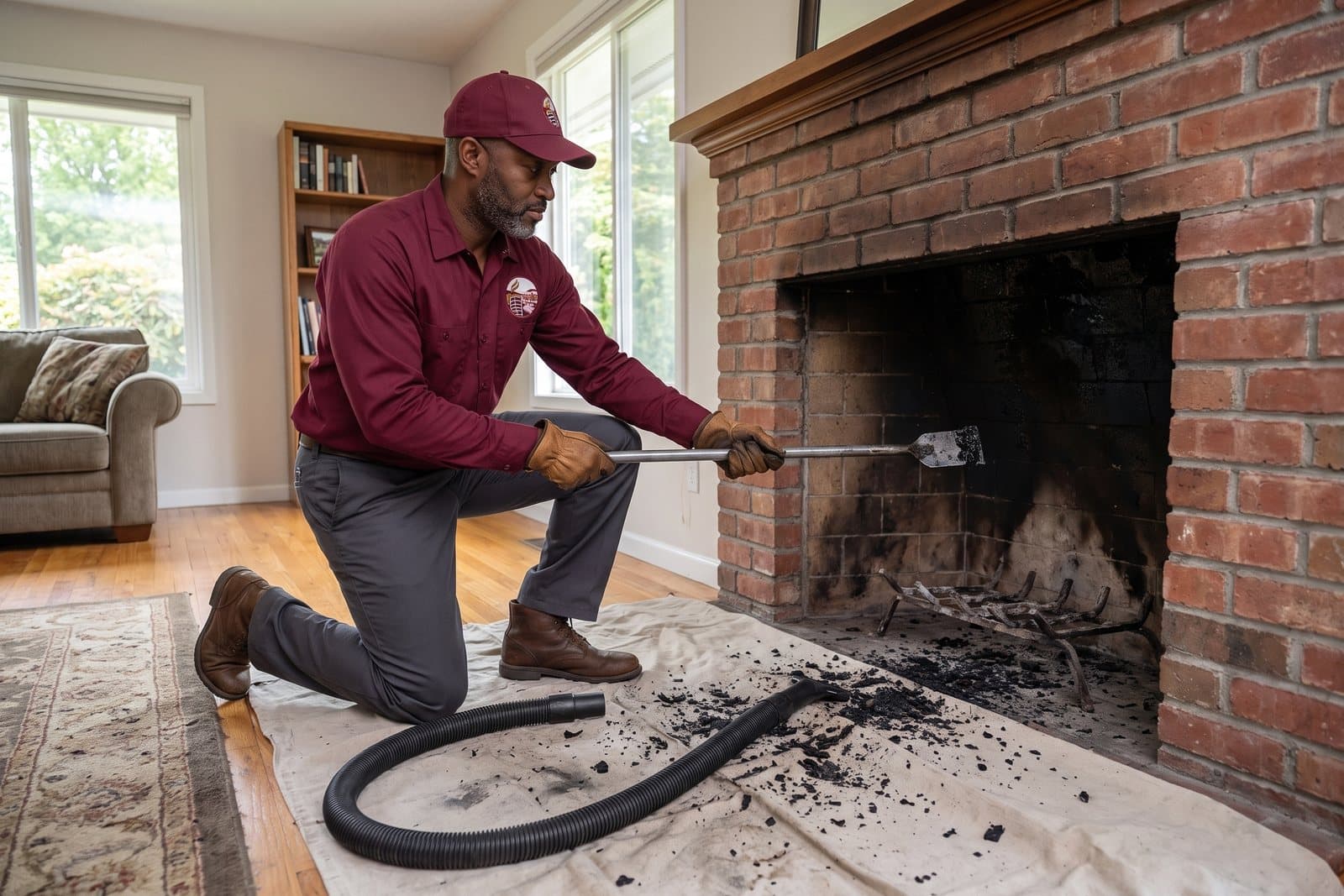
Video grading of the deposit and a note of where it sits
Learn more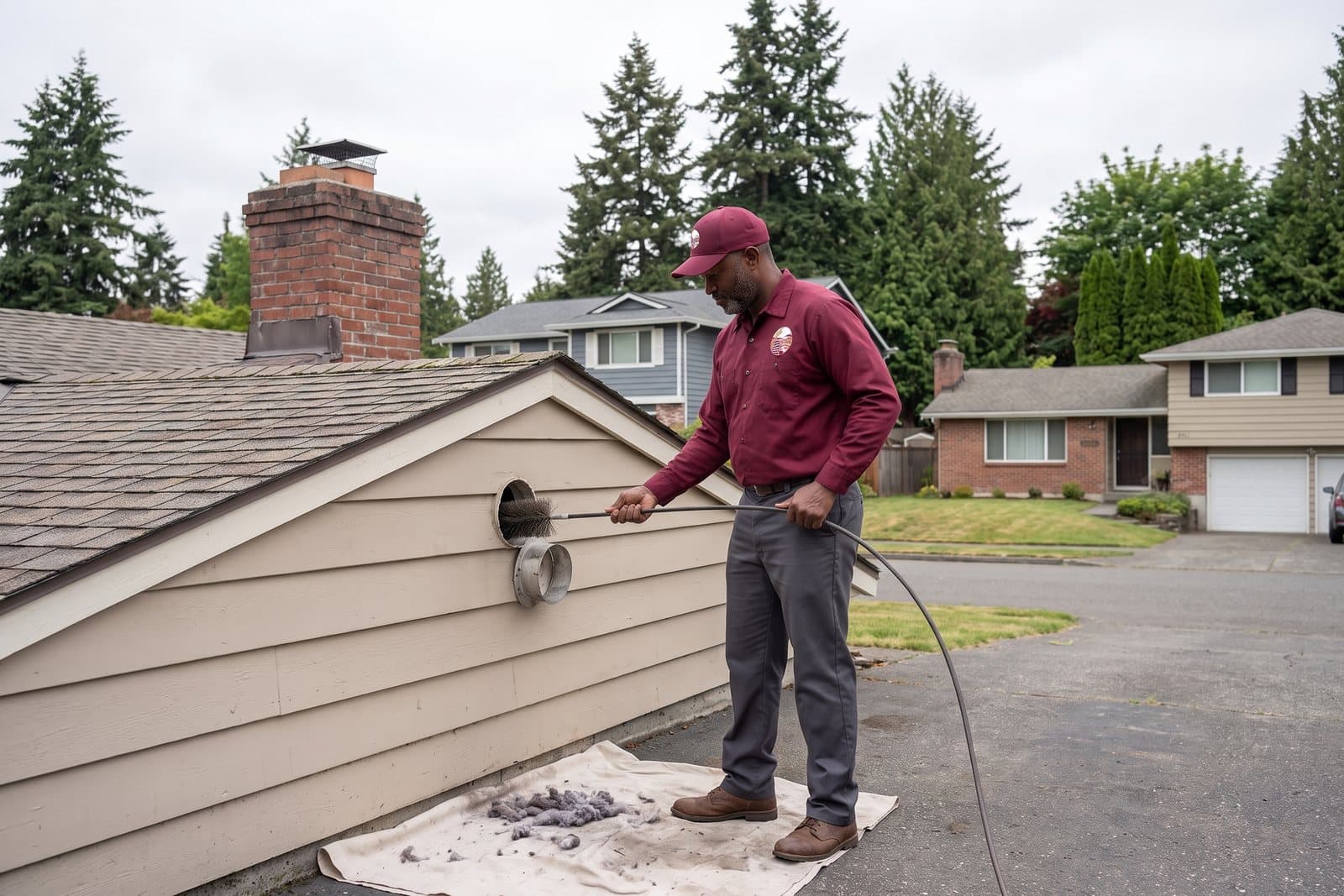
The full duct brushed with rotary rods and flushed with air
Learn more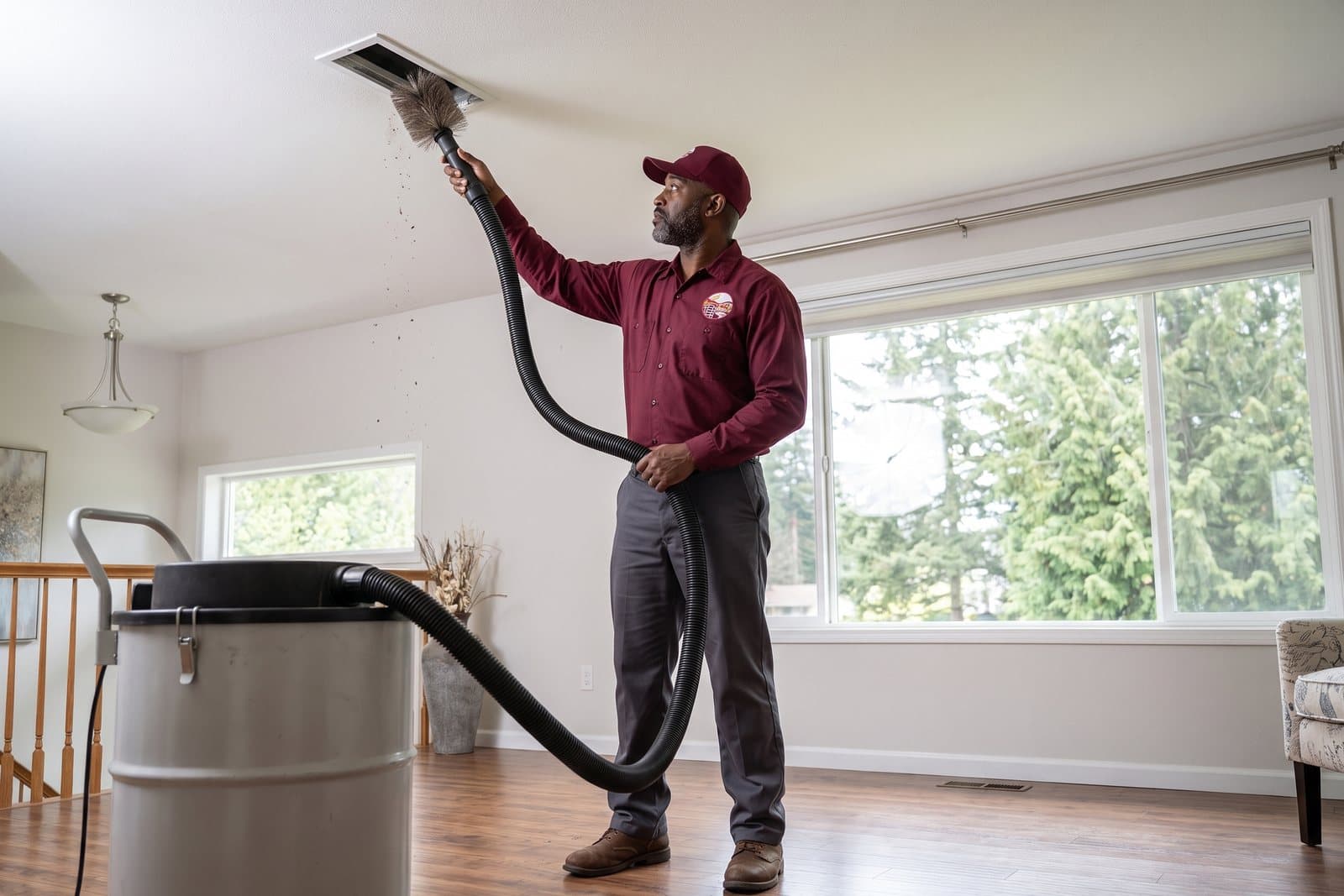
All supply and return branches agitated while the system is under negative pressure
Learn moreRanges shown for orientation — the exact figure is written up on-site, after the inspection.
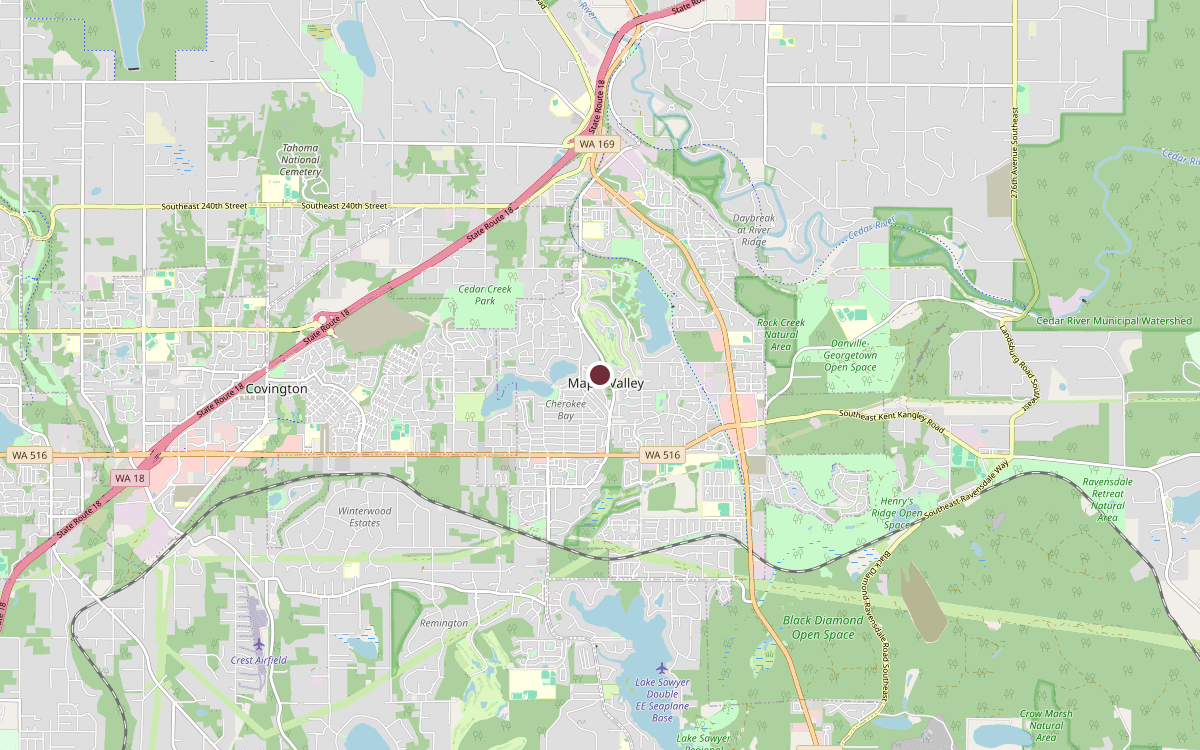
Service-area map — Maple Valley, WA. Map data © OpenStreetMap contributors.
Maple Valley lies in the Cedar River valley, about 10 miles southeast of Renton. The Census Bureau's 2020 to 2024 survey counts 28,287 residents, and the state's Office of Financial Management puts the April 2026 figure at 29,340. It is a city of owner-occupied houses: about 83.8% of housing units are single-family detached and owners live in roughly 83.2% of the occupied homes. WeatherSpark's land-cover summary finds trees on about 62% of the land within two miles, with a maximum elevation change of 449 feet over the same distance.
HistoryLink dates the first land claims here to 1879. The town was laid out in 1887 and platted in 1890. Lumber, coal and railroads drove its early growth: trains began carrying coal from Black Diamond through the area in 1885, the Milwaukee Road arrived in 1907, and Cedar Mountain, just north of town, was mined from 1884 until as late as 1947. A three-floor brick school went up in 1920.
Lake Wilderness had one of King County's larger lumber mills before it became a resort. Development of the resort began in 1925, and by 1949 it offered 60 rental cabins, a bowling alley and a nine-hole golf course. Lake Wilderness Lodge, built in 1950, received a national honor from the American Institute of Architects in 1952, and the property joined the county park system in 1964. We found no readable source for the city's incorporation date, so this page does not give one.
The housing itself is far newer than that history. Census estimates put the median year of construction at 2001, against 1983 for King County. Only about 1.5% of Maple Valley's 9,633 housing units predate 1960. Roughly 7.3% date from the 1960s and 1970s, 38.1% from the 1980s and 1990s, and 53.1% have been built since 2000. Homes from before 1940 number a few dozen.
What those figures do not say is what kind of fireplace each house has. No public record separates brick chimneys from factory-built units in framed chases or from direct-vent gas appliances, in this city or in any neighborhood of it. We therefore identify the system at the visit and never from the address.
In WeatherSpark's model the wetter part of Maple Valley's year lasts some 7.3 months, from October 9 to May 17, with November the wettest month at about 8.9 inches. The nearest long-record station, Landsburg on the Cedar River, averaged 56.12 inches of precipitation and 10.4 inches of snowfall a year over more than a century of records.
At that station the thermometer reached 32°F or below on about 80 days in an average year, compared with about 60 at Kent on the valley floor. For anything built of brick, mortar or sheet metal, that combination of long soaking and frequent frost is the main source of wear. Exterior work is best planned for the clearer stretch, which WeatherSpark's charts run from mid-June into early October.
Maple Valley's own list of work that needs a permit was not readable when this page was researched, and we will not state one from memory. What is on record: the city's Ordinance O-21-717 of January 2021 moved its building code to the 2018 residential, mechanical and fuel gas editions, and Washington's 2021 codes then took effect statewide on March 15, 2024. Before work that replaces an appliance or alters a flue, we ask the city's permit staff.
Addresses outside the city limits, including Hobart and the rural land around Maple Valley, fall under King County. There, a wood stove or fireplace that is newly installed, swapped out or moved calls for a county residential mechanical permit, and the county takes applications through MyBuildingPermit.com.
The Census Bureau asks each household what fuel does most of its heating. In Maple Valley, 59.0% answer utility gas and 38.5% electricity. Wood is the answer for a small number of homes, a figure so low that its margin of error nearly swallows it. King County as a whole comes in at about 0.6% and Washington at about 2.8%.
The unincorporated Hobart census area, which borders the city, is another world: roughly one occupied home in ten heats mainly with wood, 15.5% use bottled or tank gas, and utility gas reaches only about one home in five. These numbers count primary heat only. Fireplaces and stoves lit only now and then are outside what the survey measures, so more chimneys are in use than these figures suggest.
A household that depends on its stove should know one rule in advance. To keep burning during an air quality ban, its application must already have gone to the regional clean air agency and been approved for the exemption the agency reserves for houses that cannot be heated adequately any other way.
Under state law, calling an air quality burn ban in King County falls to the Puget Sound Clean Air Agency. Its bans cover Maple Valley and the unincorporated land around it alike. The first stage closes down open fireplaces and uncertified stoves and inserts. The second closes every wood-fired device and pellet stoves too. In either stage, a home with an approved exemption may burn but may not put out visible smoke, and outdoor fires of every kind, recreational ones too, are prohibited.
Enforcement is not symbolic. Under WAC 173-433-150, the state Department of Ecology, local air authorities, health departments, fire departments or police gain the power to enforce a ban three hours after its declaration. The agency adds a reassuring note for this county: windier weather often spares King County a ban that its neighbors get. Status is posted online with an area map, and summer fire-safety bans are a different order altogether, issued by the county fire marshal.
WeatherSpark's summary of the land within two miles of Maple Valley is about 62% trees and 36% built surfaces. Around Newcastle the tree share is about 13%. That canopy is why chimney tops in this city collect needles, cones, leaves and moss faster than those nearer Lake Washington.
Oregon State University Extension uses the word inevitable for roof moss in a region as moist as the Pacific Northwest. It explains that moss does no direct harm to roofing; the damage comes from what moss collects, soil and debris, and from the water it retains, which keeps surfaces wet for longer. Because moss needs shade as well as water, the lasting remedy, in the Extension's view, is to cut back nearby trees until sunlight gets to the roof.
On a chimney, the same mechanism attacks the crown, then the mortar joints, then the uphill side where litter piles up against the flashing. Two cautions from the same source apply to anyone treating a roof: careless pressure washing can damage shingles, and zinc sulfate should not be used where gutters, downspouts or flashing are copper, because zinc corrodes copper.
The grid we quote from for Maple Valley homes — the $99 inspection comes first, the written quote before any work.
| Service | Price in Maple Valley | What that covers |
|---|---|---|
| Chimney Sweep | $189–$459 | Full flue swept, Level 1 inspection included |
| Chimney Inspection | $99 plus tax | Level 1 visual; Level 2 adds a full camera scan |
| Chimney Relining | From $1,900 | Full-length stainless liner, sized to the appliance |
| Chimney Repair | From $375 | Masonry repair — brick and mortar, scoped after diagnosis |
| Chimney Cap Installation | $265–$850 | Stainless cap fitted; multi-flue and custom at the top |
| Masonry Repair (Crown / Repointing) | From $425 | Crown work, repointing and tuckpointing by surface area |
| Chimney Waterproofing | $320–$795 | Breathable sealer — reapplied every 3–5 years in this climate |
| Chimney Flashing Repair | $330–$1,500 | Reseal at the low end, full flashing replacement at the high |
| Gas Fireplace Service | $189–$475 | Annual service and tune-up; repairs quoted after diagnosis |
| Creosote Removal | From $245 | Priced by creosote stage — glazed stage 3 is the heavy end |
| Dryer Vent Cleaning | $105–$259 | Full run cleaned; roof or upper-floor terminations at the top |
| Air Duct Cleaning | From $535 | Whole HVAC system — trunks, branches and every register |
Ranges are what these jobs are quoted at in Maple Valley. The exact figure is set on site after a $99 inspection (credited toward the job if you go ahead), and you approve it before any work starts.
Before and after
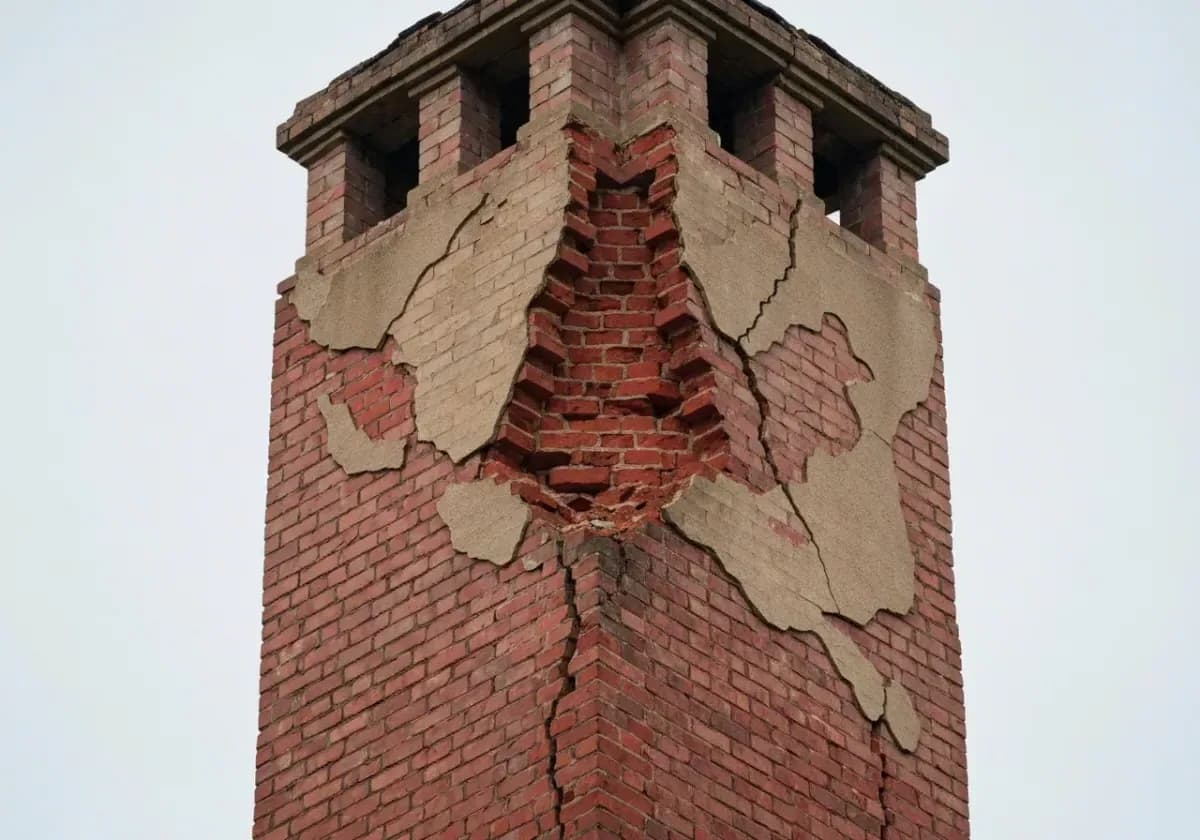
Illustrations of what each repair changes on a typical chimney — not photos of a specific job.
 Before
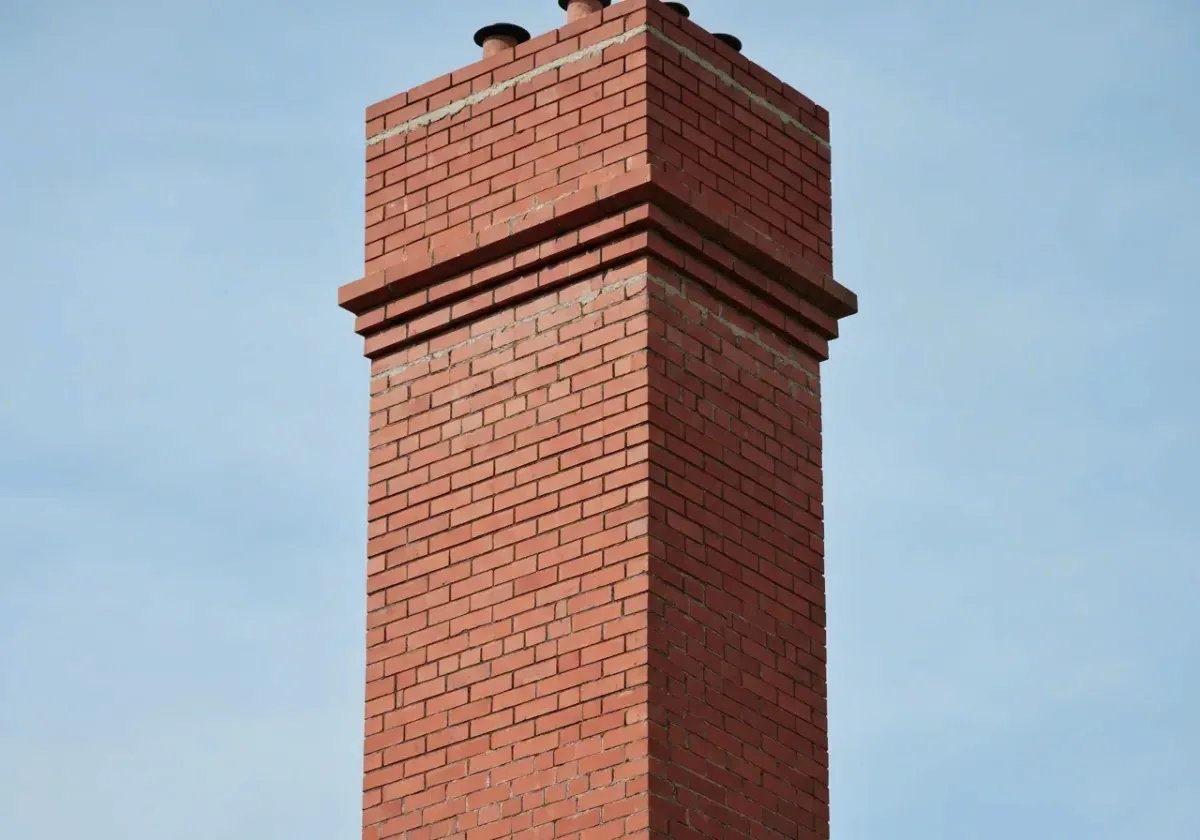 After
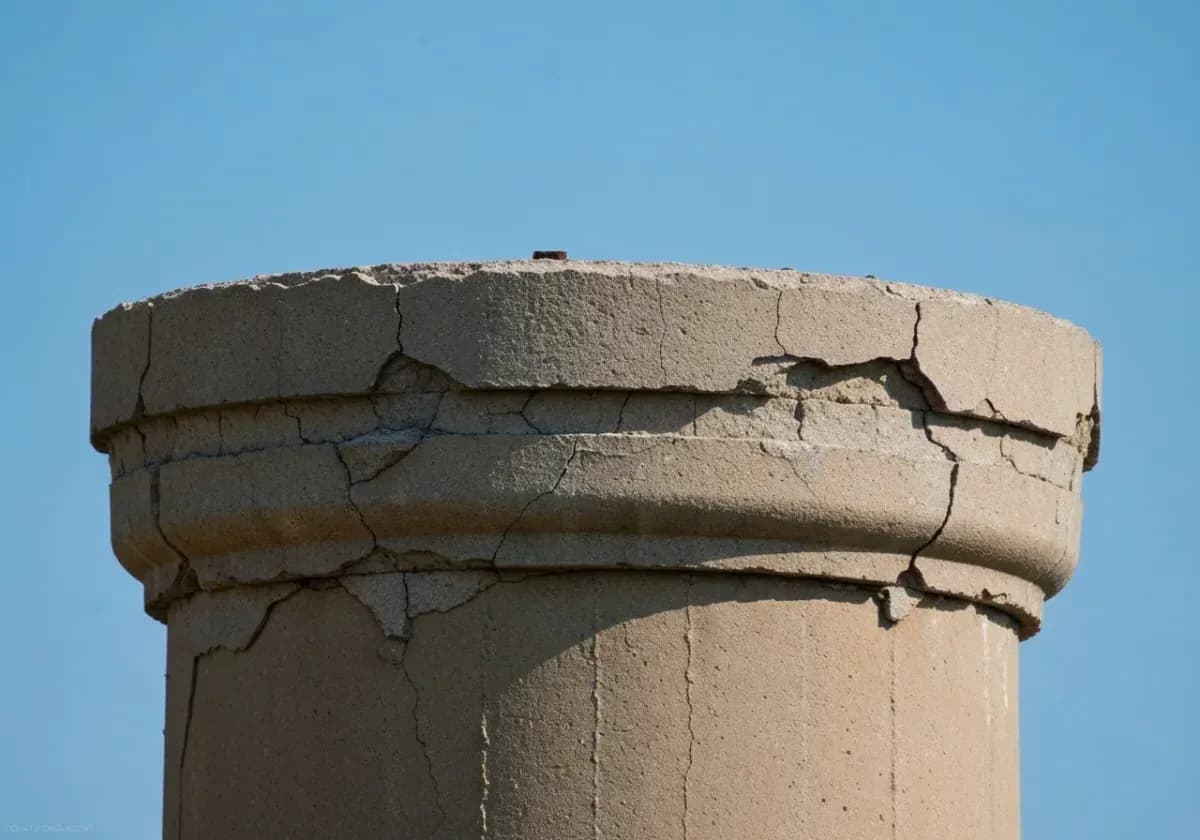 Before
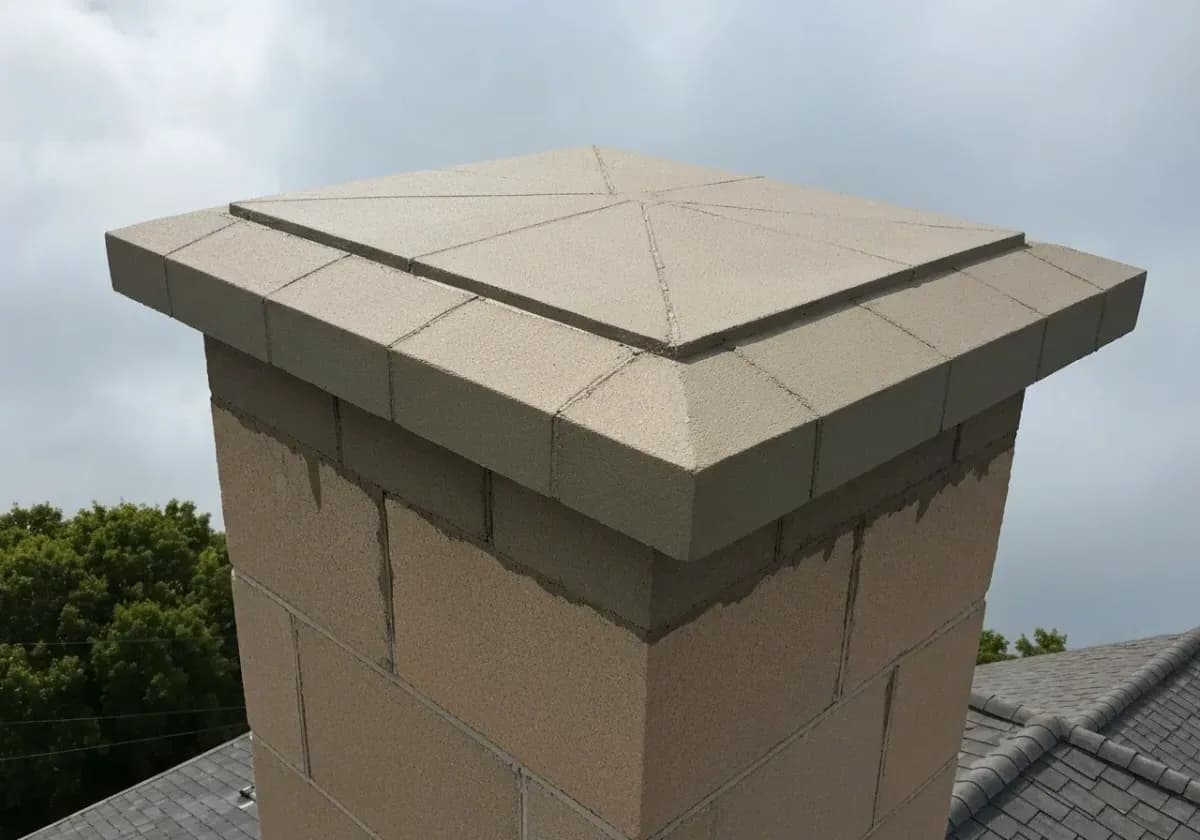 After
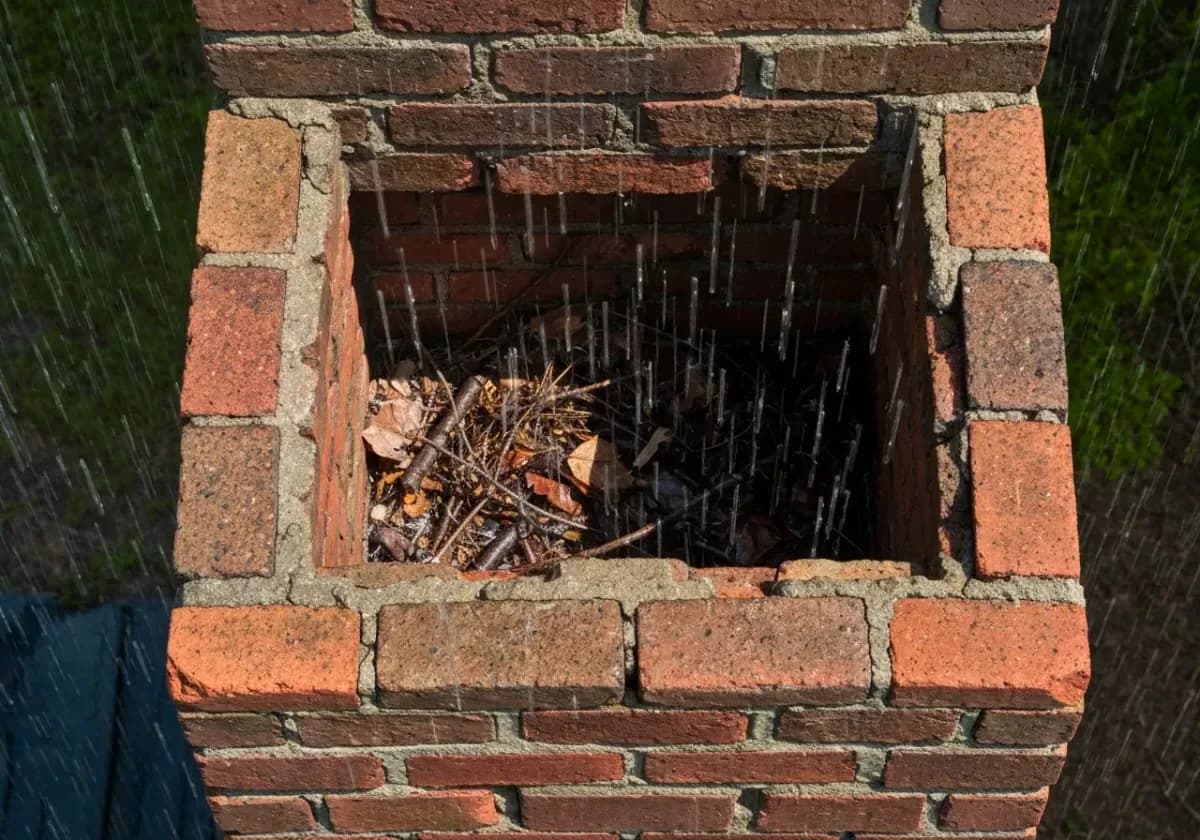 Before
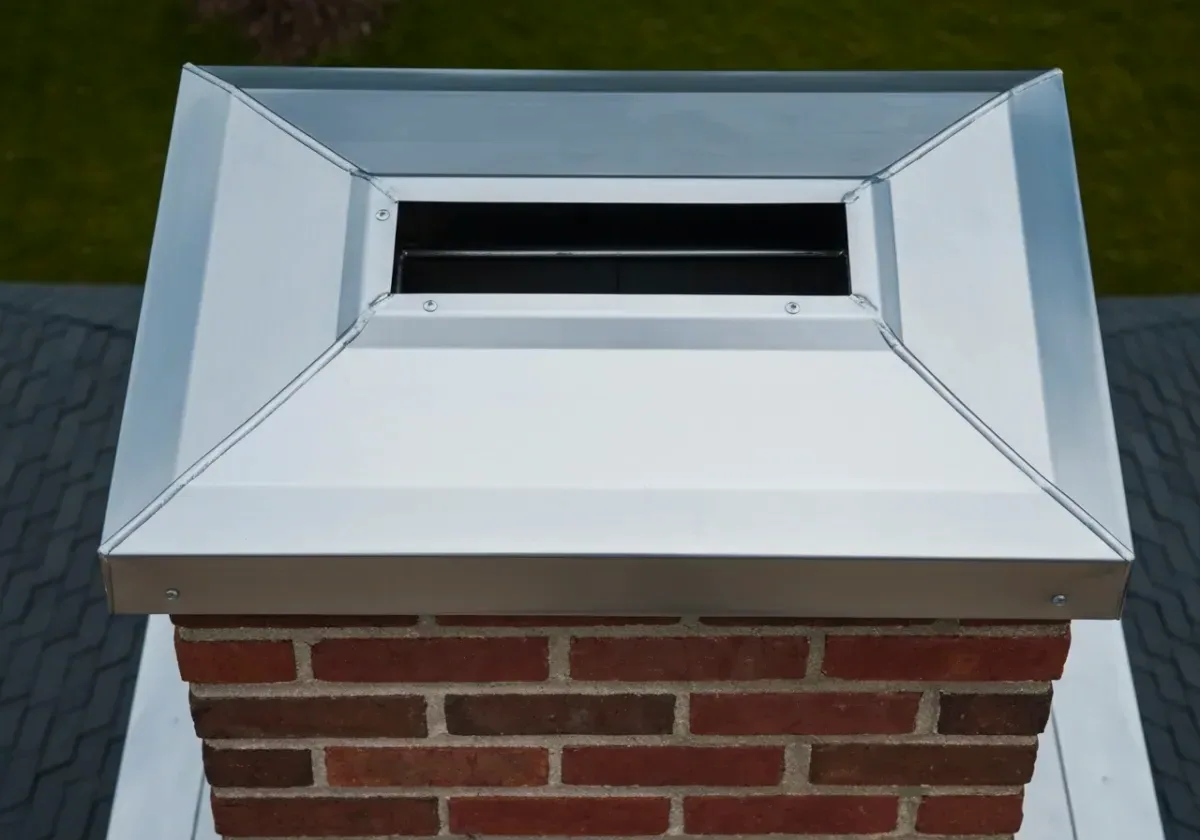 After

Four steps, each one on paper — so you always know what happens next.
Choose a genuine opening on the crew's calendar. Confirmation is immediate.
Liner, crown, cap, flashing and masonry examined in order — each finding photographed.
One document, plain numbers, covering only the work your chimney genuinely needs.
The repair is completed, then handed over with before-and-after photos of every item.
Yes. Maple Valley is one of the four cities on our route, with Renton, Newcastle and Snoqualmie. For an address just outside the city limits, ask when you book.
$99 plus tax per chimney. Approve the quote we write afterward and the job is billed $99 lower.
Twenty-five wet seasons are enough to rust a metal top, crack a crown or dry out the sealant along the roofline. Age alone proves nothing, which is why we look before recommending work.
On ordinary days, yes, with dry seasoned wood. During an air quality burn ban the rules tighten by stage, and they are set by the regional clean air agency, not by the city.
Late summer for anything on the outside of the chimney, and before the first fall fire for the flue itself. Work inside the house has no season.
Choose a genuine opening on the crew's calendar. We inspect, quote in writing, and hand over a photo record of every repair.