A Level 2 inspection covers everything a routine check does, then goes where a routine check stops: onto the roof, into the attic and the crawl space where the chimney passes through them, and down the entire flue with a camera. Nothing is dismantled. The result is a set of photographs, a recording and a written statement of what is sound and what is not. Below, the visit is described in the order it happens at a Renton house, with the measurements we take against the state residential code.
Three levels, briefly
The trade describes chimney inspections in three levels. Level 1 is the check that goes with a routine sweep: the readily visible parts of the firebox, the damper, the flue as seen from below and the outside of the stack. Level 2 goes further: the roof, plus whatever part of the attic and crawl space can be reached, and a camera passed along the flue from one end to the other. Level 3 is the rare case in which part of the building or the chimney has to be opened up to reach a concealed defect.
As for timing, NFPA 211, in the wording CSIA reproduces for homeowners, sets a yearly minimum: each chimney, each fireplace and each vent gets checked for soundness, for deposits and for proper clearances. Which level that yearly look should be is a judgment about the chimney's history. We go to Level 2 when something has changed or is unknown: the house is changing hands, a new insert or stove is going in, the flue is about to be relined, there has been a chimney fire, or the stack has been through an earthquake or a storm that brought a tree down nearby.
On the roof
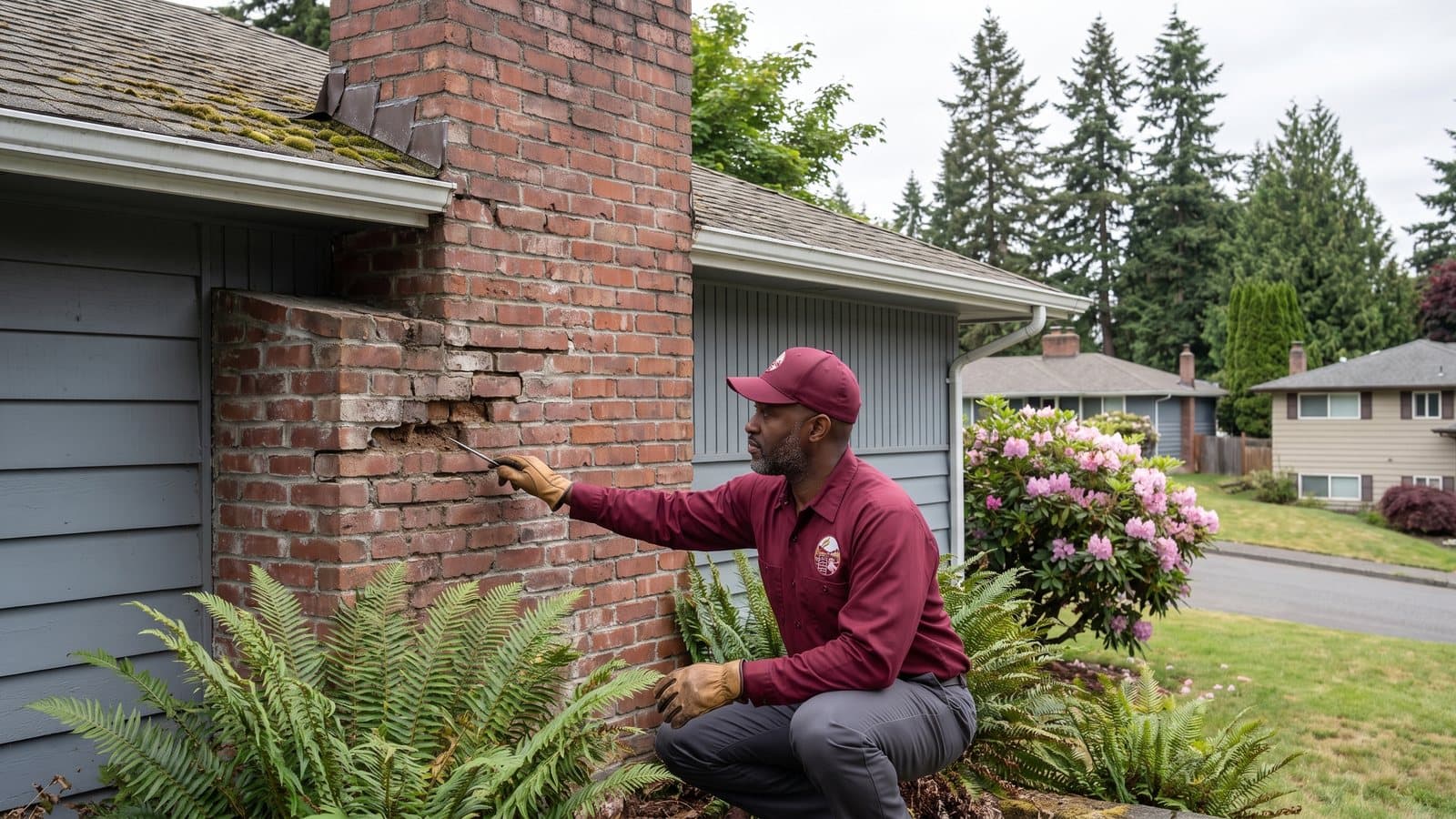
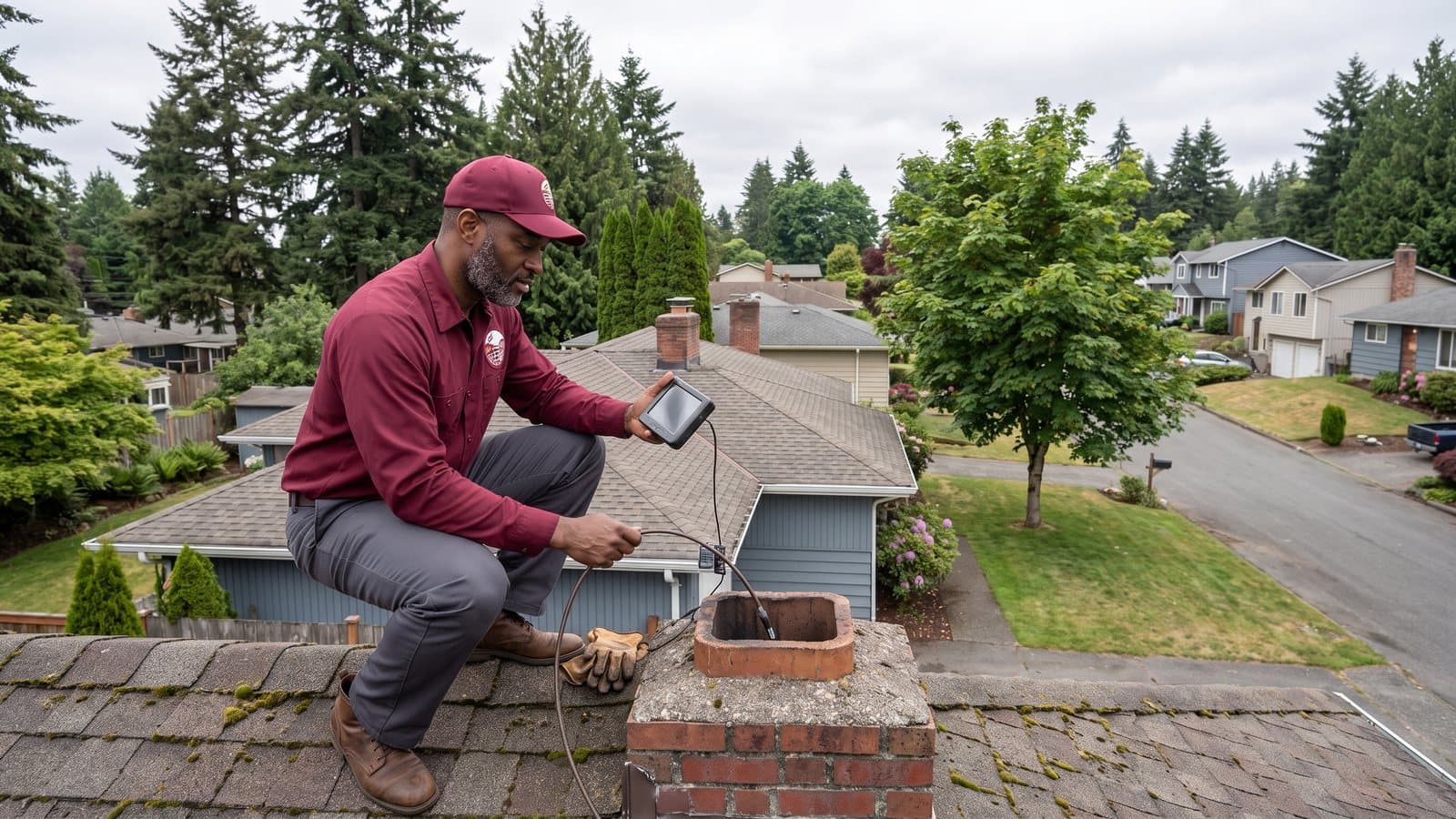
The technician starts at the top. The cap and its screen are checked for corrosion and blockage. The crown is examined for cracks and for the slope and drip edge that Washington's 2021 residential code requires of a masonry chimney top. Mortar joints and brick faces are looked over on all four sides, and the flashing is checked where the stack meets the roofing.
Height is measured. The code's rule has two parts: measured from the highest spot where the stack comes through the roof, there must be 3 feet of chimney or more; and whatever part of the building lies within a 10-foot radius, the top has to clear it by 2 feet. A chimney that falls short, often after an addition raised a nearby roofline, tends to draw poorly and smoke in the wind.
In the attic and the crawl space
This is the part a Level 1 never sees. Where the chimney passes through the attic, we look at the outside of the masonry for cracks, staining and the white salt deposits that mark a water path, and we measure the gap between the masonry and the wood framing around it. Below the house, the base of the chimney and the ash pit are checked for settlement and moisture.
In Renton the attic check has a second purpose. In Seismic Design Categories D0 through D2, the 2021 code expects masonry chimneys to carry reinforcing and to be tied into the structure at every floor, ceiling or roof line that sits more than 6 feet above grade. Older houses predate that requirement; in the words of the city's hazard annex, many were put up before seismic codes took the local risk into account. We report whether anchorage is visible. Adding it is structural work for a mason or an engineer, not something a sweep quotes.
Inside the flue
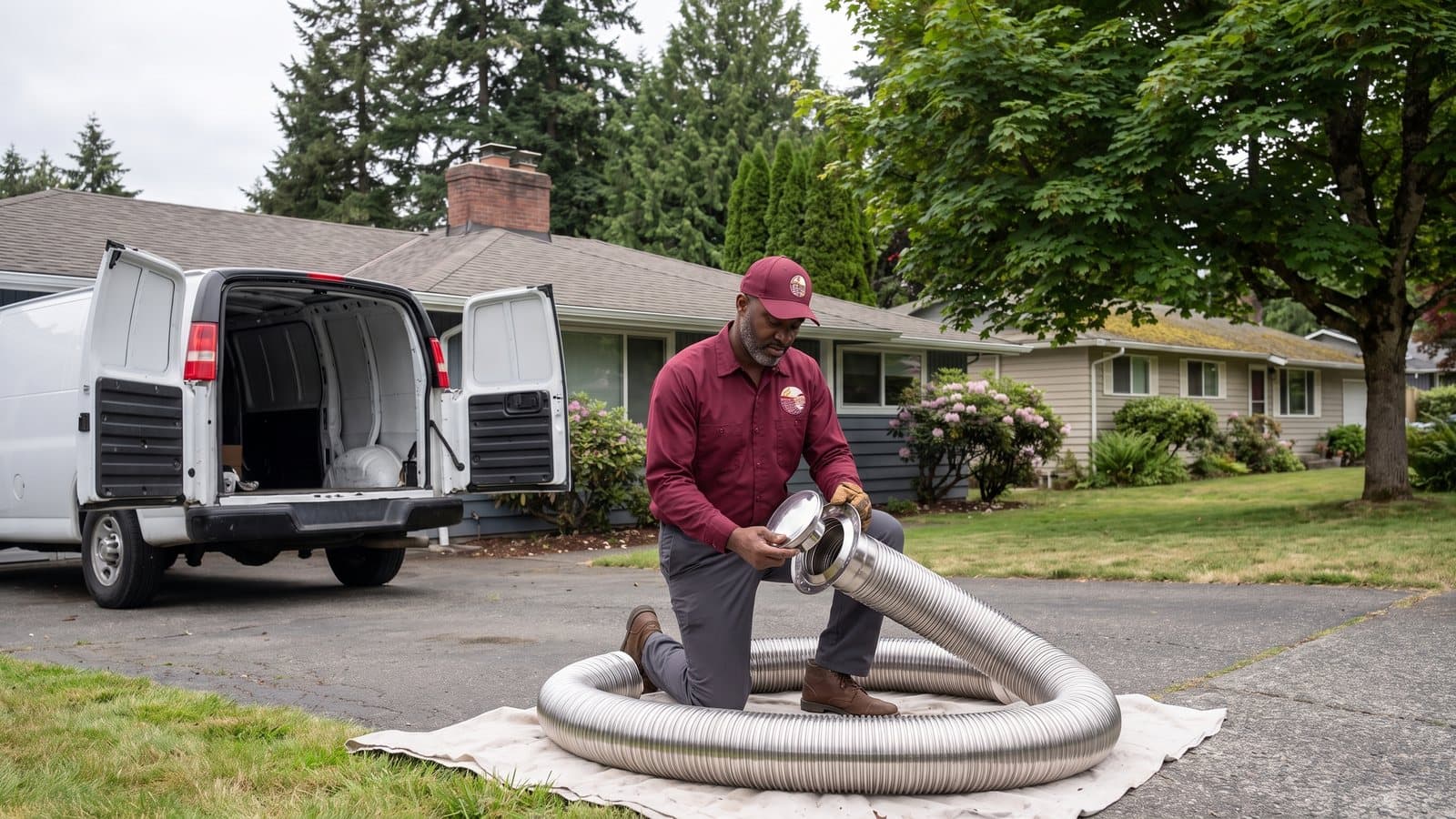
A camera on a rod travels the flue from the firebox to the cap, or the other way, recording as it goes. Every tile and every joint between tiles appears on screen at close range. The scan shows cracked or missing tiles, open joints, glazed creosote, offsets, and anything lodged in the passage. For a metal liner or a factory-built flue, it shows seams, buckling and corrosion.
This recording is what makes the difference in a sale. Census estimates place the median Renton home in 1988, and about 39 percent of the city's housing was built before 1980. Many of those flues have served several owners, a change of appliance or two, and the Nisqually earthquake of 2001, after which the city's annex described local damage as mainly cracked masonry and fallen chimneys. A buyer peering up the flue from the hearth with a flashlight sees the first tile.
At the hearth: what we measure
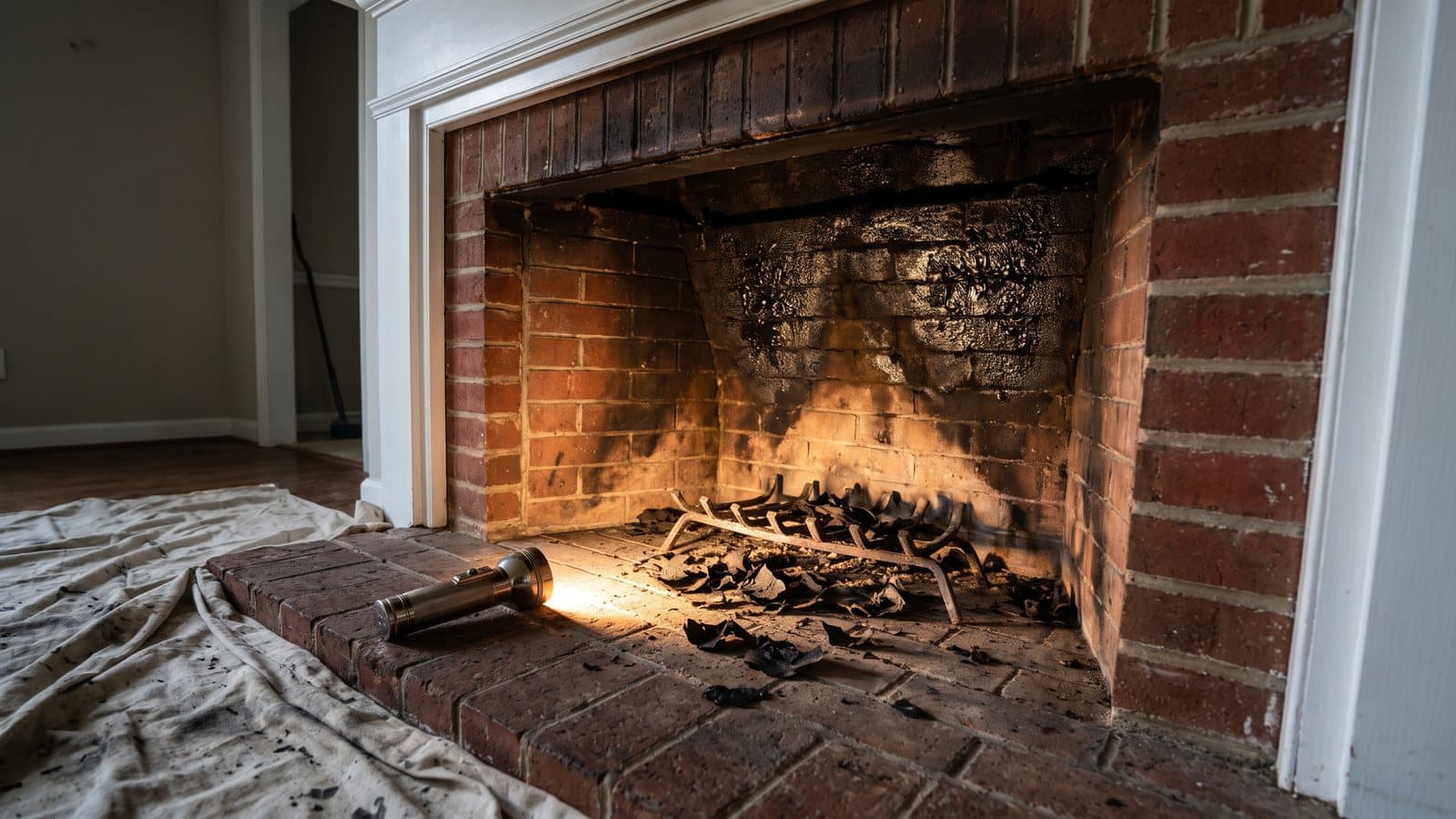
Back in the room, the firebox, smoke chamber and damper are examined, and a tape measure comes out. The table lists the dimensions we compare with the 2021 Washington State Residential Code for a masonry fireplace.
A house built under an earlier code is not automatically out of order because a number differs, and we say so in the report. The measurements matter most when something is being changed, such as a new mantel, a new floor in front of the hearth or an insert.
| What is measured | What the 2021 code asks | Why it matters |
|---|---|---|
| Hearth extension | 16 in. in front and 8 in. to each side; 20 in. and 12 in. when the opening is 6 sq ft or more | Embers that roll out land on masonry, not flooring |
| Combustible mantel or trim | None within 6 in. of the opening | Wood near the opening chars over time |
| Framing around the fireplace | 2 in. clear at front and sides, 4 in. at the back | Heat passing through masonry must not reach wood |
| Damper | Ferrous metal, at least 8 in. above the top of the opening | A warped or missing damper leaks heat and lets smoke roll out |
| Cap or spark arrestor opening | Open area no less than four times the flue outlet's | An undersized cap chokes the draft |
What you get, and what it runs
The report states the condition of each part, with photographs from the roof, the attic and the crawl space, and the flue recording. Where a repair is needed it comes with a written quote. If the report is for a sale or an insurer, ask the agent or the company what they need in it before the visit, since each sets its own requirements.
The fee does not change with the level. Our inspection visit is $99 plus tax per chimney, camera included; when the repair quote gets your approval, its total drops by that $99. For comparison, the Renton page of Chimney 360 Services, another local company, shows $199 to $299 for a video inspection at Level 2.
Frequently asked questions
How long does a Level 2 visit take?
We book a two-hour slot. A single straight flue with easy roof access takes less. A house with two chimneys, a steep roof or a tight crawl space uses the full slot. The technician does not leave before walking you through the footage.
Do I need to prepare anything?
Do not burn for a full day beforehand, so the firebox and flue are cold. Clear the hearth and a few feet around it, and make sure the attic hatch and the crawl space access can be reached. If the home is being sold, tell us who should receive the report.
Is a home inspector's chimney check the same thing?
No. A general home inspection looks at the chimney from the outside and at the firebox from the room, and usually says so in its limitations. It does not put a camera through the flue. When a home inspection report recommends evaluation by a chimney specialist, this visit is the evaluation it means.
What happens if the scan finds a problem?
You receive the photographs, the footage and a written quote for the repair, with each defect located. Nothing is repaired on the spot unless you ask for it. If the finding makes the fireplace unsafe to use, the report says so in plain words.
Sources
- CSIA — resources for homeowners — accessed October 4, 2026
- UpCodes — 2021 WA Residential Code, chimneys — accessed October 4, 2026
- Cornell LII — WAC 51-51-1001 — accessed October 4, 2026
- Renton annex, regional hazard plan — accessed October 4, 2026
- ACS 2020–2024 year built (Census Reporter) — accessed October 4, 2026
- Chimney 360 Services — Renton page — accessed October 4, 2026
Related services