Two contractors look at one chimney in the Renton Highlands. The first writes a figure well above the second. Neither is necessarily wrong, because they may not be quoting the same job. Repointing is billed by how much mortar has to come out, how deep, how high off the ground and what else is found on the way. This article explains the six things that set the size of a repointing quote, shows how to line two quotes up, and says where the dollar figures are published.
The repair in four steps
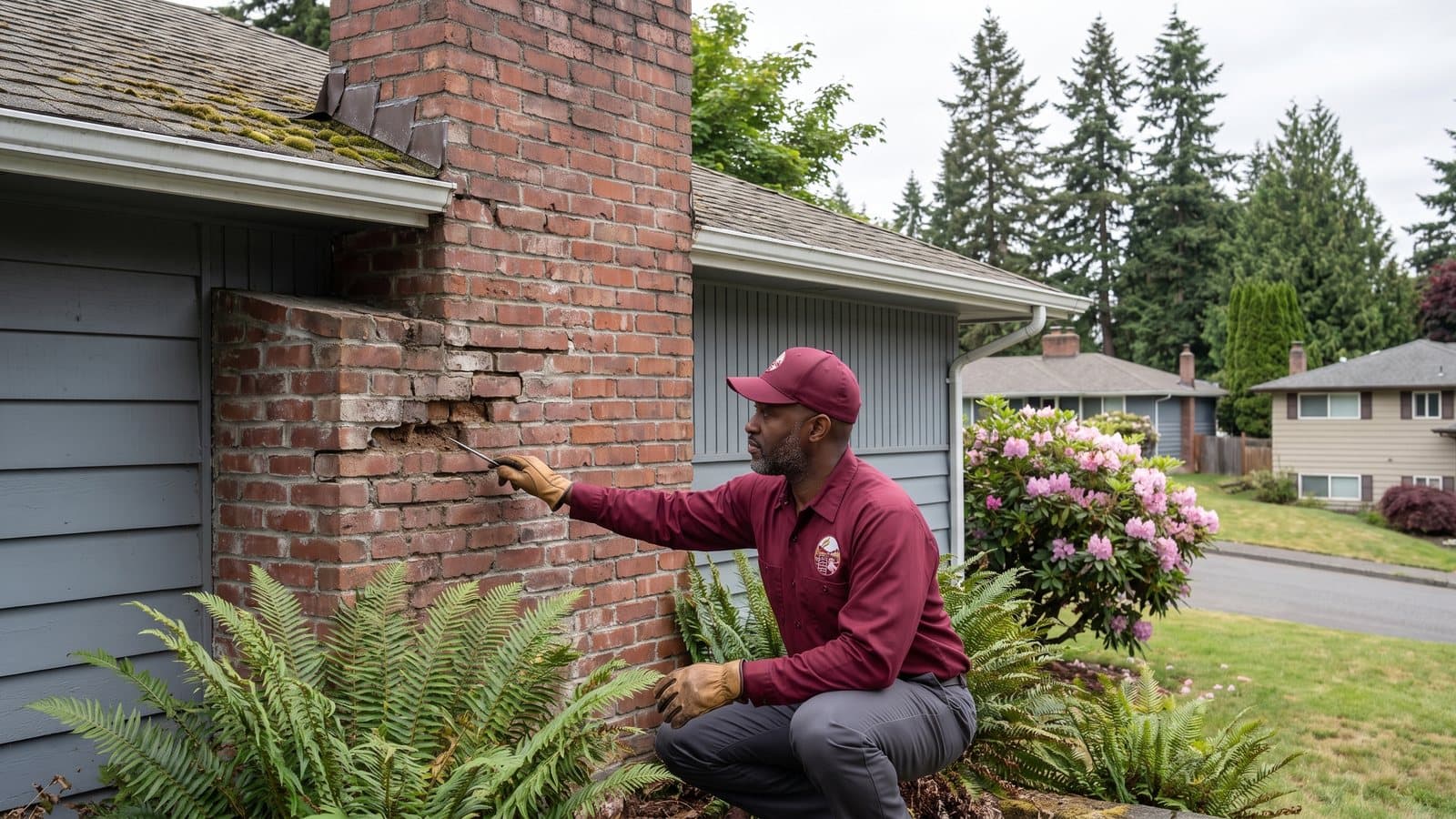
In a brick chimney the mortar is meant to give way first. It is deliberately softer than the brick, so that weather wears the joint and spares the unit. When joints have receded, cracked or turned sandy, the repair goes like this: the old mortar is ground or raked out to a consistent depth, the dust is flushed from the joint, new mortar of a matching type is packed in layers, and the surface is tooled so that water runs off it instead of sitting on a ledge.
Left a few more winters, open joints let water into the core of the stack, bricks loosen, and the conversation moves from repointing to rebuilding the courses above the roof.
Six things that set the size of the quote
Each line of the table is a reason two honest quotes can differ. When you compare, check that both quotes answer the question in the third column.
Access deserves a word of its own. Renton is hilly ground; the city's hazard annex says steep slopes are found throughout it. A chimney on the downhill side of a house can stand a full story higher above grade than the same chimney seen from the street, and the setup needed to reach it safely is part of the job.
| Factor | Why it moves the figure | Question to ask of each quote |
|---|---|---|
| Area to repoint | One weather face is a different job from all four sides | Which faces, and from what height to what height? |
| Depth of removal | Shallow skim coats fall out; proper depth takes longer | How deep will the old mortar be cut out? |
| Height and access | A steep roof or a tall stack needs staging | Is scaffolding or roof protection included? |
| Brick condition | Spalled or loose bricks must be replaced, not pointed around | How many bricks are being replaced? |
| Crown and cap | Water from a cracked crown ruins new joints from above | Is the crown repaired, and is that a separate line? |
| Mortar match | Mortar harder than the old brick damages it over time | What mortar type, and will the color be matched? |
What Renton weather does to a mortar joint
Joints wear out because they get wet and stay wet. The city's hazard mitigation annex describes the local climate as 38 inches of rain a year spread over 154 days with precipitation, with roughly 6 inches a month from November through January and less than an inch in July and in August. For the wettest winter months west of the Cascades, the Western Regional Climate Center's tally is 20 to 25 days with rain or snow, against a mere four to eight days when the sky is clear or only partly clouded. A joint soaked in November has few chances to dry before March.
Wind decides which side wears first. The annex gives the prevailing wind as south to southeast, and the climate center reports that the strongest winds of late fall and winter come from the south or southwest. On most chimneys we see, the faces turned that way are the ones with receded joints, while the north face holds its mortar but grows moss. Oregon State University Extension explains why moss matters: the plant does no direct harm, but the soil and debris it collects keep the surface under it damp.
Frost finishes the work. By the annex's account a run of several freezing days is an ordinary part of winter, while long hard freezes down in the 20s are rare. Water that has entered an open joint expands when it freezes and widens the gap for the next storm.
Lining up two quotes
Put the two documents side by side and look for the same items in each. A complete repointing quote names the faces and the approximate area, states the depth of removal, says whether bricks are being replaced and how many, treats the crown as its own line, and says how the chimney will be reached. It also says what is not included. If one quote is a single line reading "repoint chimney" and the other is a page, the gap between the totals is probably a gap in scope.
The crown line is the one most often missing. Washington's 2021 residential code requires a masonry chimney to end in a concrete, metal or stone cap that slopes to shed water and has a drip edge, with a sealed break around the flue liner. A flat, cracked mortar wash does none of that, and new joints under it will be wet again by the first winter.
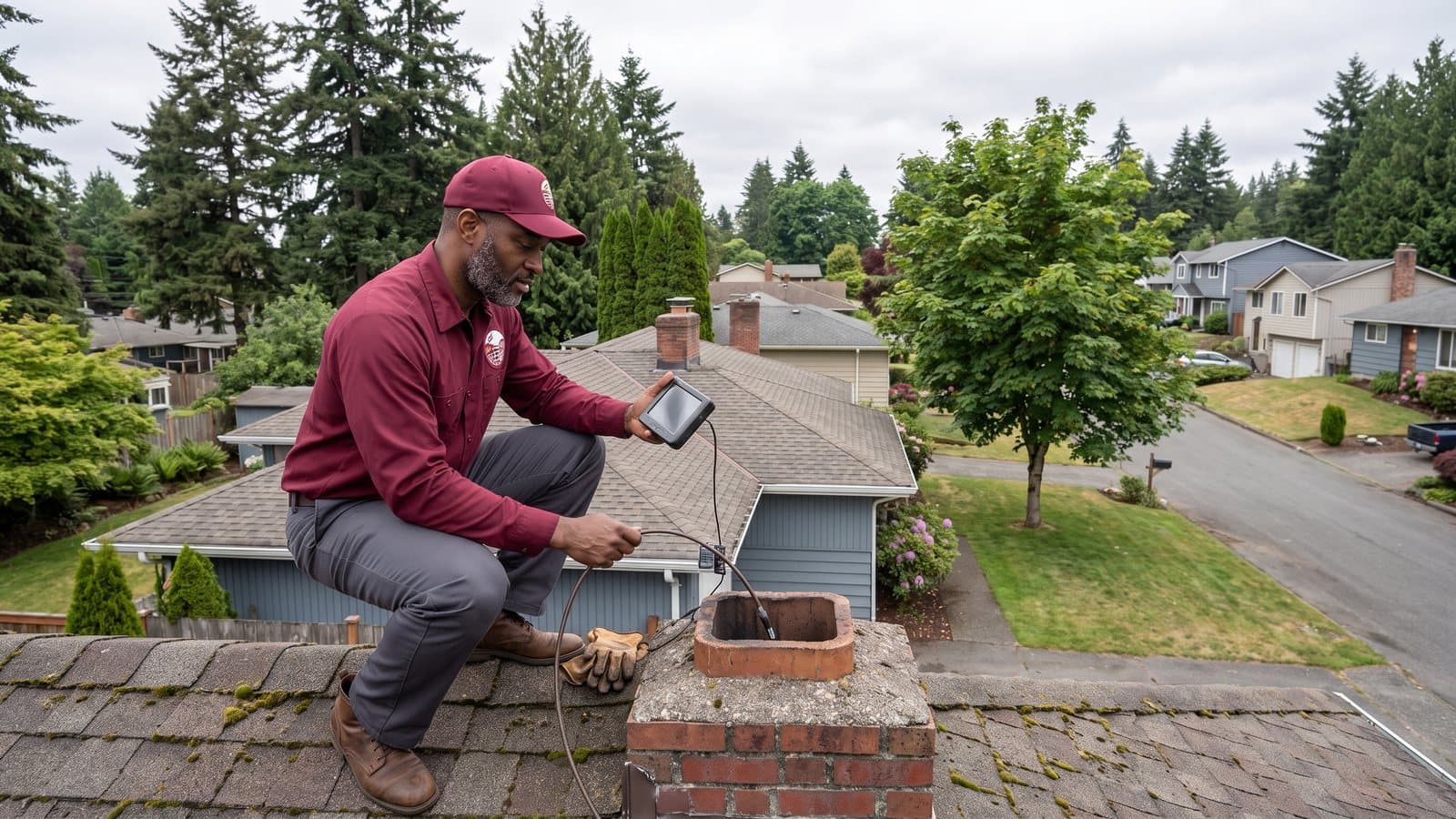
Ask for photographs. Open joints, a cracked crown and loose bricks all show clearly in a picture taken from the roof.
Repoint, rebuild, or wait
Repointing is the right repair when the bricks are sound and the stack is plumb. If bricks rock under hand pressure, if faces are flaking off across a wide area, or if the chimney leans, new mortar in the joints will not hold it together, and the honest answer is to take the damaged courses down and relay them.
Waiting is reasonable only when joints are weathered but still full and tight. In that case a breathable water repellent and a sound cap buy time. Renton has a large stock of chimneys old enough for this question to come up: Census estimates count about 14.5 percent of the city's housing as built before 1960. Brick itself is a local story, too. Early twentieth-century Renton had brick and tile plants of its own, HistoryLink records, in a town whose first economy rested on coal, timber and clay from the surrounding hills.
Where the figures are
This article deliberately stays out of dollar tables. The masonry repair page of our price reference sets our range beside the figures other publishers give, each with its source and date, and it is kept current there instead of being copied here.
What we can state plainly: masonry repair with us starts at $425, and the largest repointing and crown jobs reach $3,200. The exact figure comes after a visit, which is billed $99 plus tax; when you accept the written quote, that $99 is credited against the repair.
Frequently asked questions
Is repointing the same thing as tuckpointing?
In everyday use around here the two words describe the same repair: worn mortar is cut out of the joints and new mortar is packed in. Strictly, tuckpointing is a decorative technique that uses two mortar colors to imitate very fine joints. If a quote says tuckpointing, ask whether it means the plain repair. It almost always does.
Can repointing be done in winter?
Fresh mortar must not freeze before it cures, and it should not be rained on hard in its first hours. Renton's hazard annex notes that freezing temperatures for several days are not unusual in winter. We repoint in winter when a dry, mild stretch allows it and protect the work, but the dependable season runs from late spring to early fall.
How long should new mortar joints last?
That depends on how wet the chimney stays, and a number of years promised in advance would be a guess. Joints under a sound crown and a working cap, on a stack that dries between storms, outlast joints on a chimney that takes water from the top. That is why the quote looks at the crown and the cap as well as the joints.
Do I need to repoint the whole chimney or only the bad side?
Only what has failed. On most Renton chimneys the weather faces wear first and the sheltered faces are still tight. A quote that repoints all four sides without saying why deserves a question. The reverse also holds: a quote that covers one face when two are open will bring you back to the same repair in a few winters.
Sources
- Renton plan annex — regional hazard mitigation — accessed October 4, 2026
- WRCC — Washington climate narrative — accessed October 4, 2026
- OSU Extension — roof moss control — accessed October 4, 2026
- UpCodes — WA Residential Code 2021, chapter 10 — accessed October 4, 2026
- Census Reporter — ACS year-built tables, 2020–2024 — accessed October 4, 2026
- HistoryLink essay 688 — Renton history — accessed October 4, 2026
Related services